Photo by Pixabay
Outdoor events are unpredictable environments. Weather shifts, crowds move, and attention is fragmented. In these conditions, branded outdoor event tents and supporting outdoor materials do more than provide shelter. They establish presence, create orientation, and signal professionalism from a distance. When executed correctly, they become the anchor of an outdoor brand footprint.
Why Branded Tents Matter at Outdoor Events
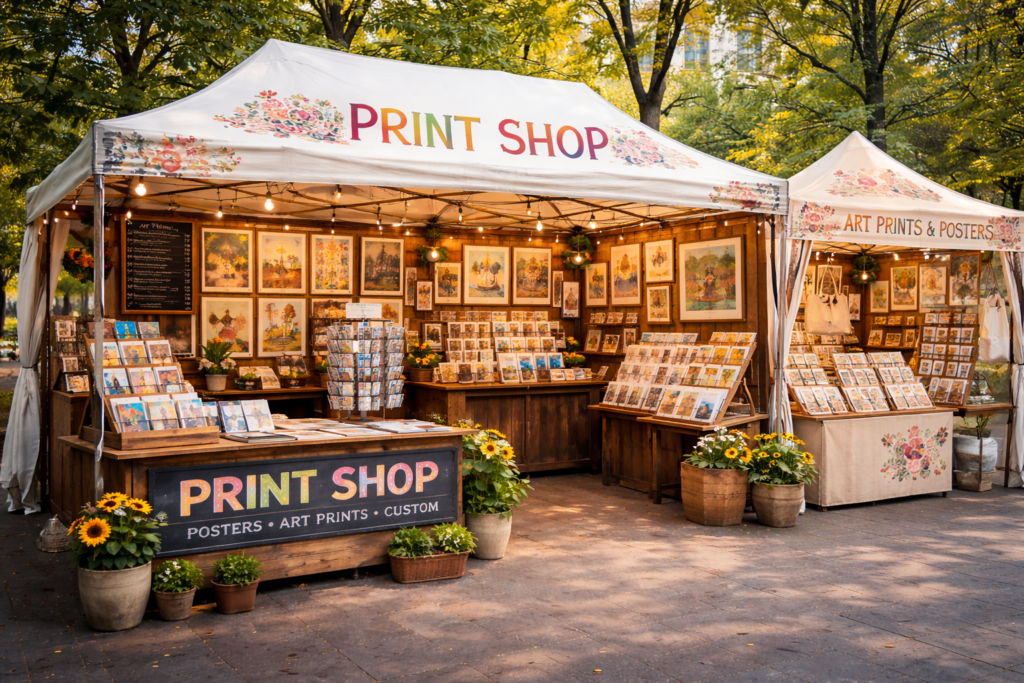
The tent is the primary structure. It defines territory and visibility before any conversation begins. A well-designed branded tent communicates legitimacy instantly. Visitors are more likely to approach a space that looks established and intentional. In contrast, generic or poorly branded structures blend into the background and reduce engagement.
Scale matters outdoors. Open spaces dilute visual impact, so branding must work at distance. Clear logos, high-contrast colours, and disciplined layouts perform better than detailed graphics. Branded event tents should be readable from across the venue, not only at close range.
Material quality affects both perception and performance. Outdoor event use demands durable fabrics, reinforced stitching, and stable frames. A tent that sags, fades, or struggles in light wind damages brand credibility. Branded event tents must be specified for real outdoor conditions, not ideal ones.
Weather resistance is non-negotiable. UV exposure causes fading, rain tests fabric integrity, and wind stresses structure. Choosing appropriate substrates and printing methods protects both appearance and safety. Outdoor branding that fails under pressure undermines trust.
Portability influences usability. Outdoor events often require quick setup and breakdown. Tents and materials that are heavy, complex, or fragile create friction. Branded event tents should balance robustness with ease of transport and assembly.
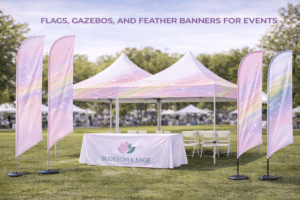
Supporting materials extend the tent’s impact. Banners, flags, table covers, and counters help frame the space and guide movement. These elements should work together visually rather than compete. A cohesive set reinforces recognition and professionalism.
Feather flags and vertical banners are effective attention tools. Their height and movement draw the eye from a distance. However, overuse creates clutter. Branded event tents benefit from selective use of vertical elements that support, not overwhelm, the main structure.
Table covers and counters bring branding down to interaction level. They frame conversations and product displays. Clean, fitted table covers signal preparation and care. Loose or mismatched covers weaken presentation.
Flooring is often overlooked but influences comfort and perception. Simple branded mats or flooring panels define space and improve usability, especially on uneven ground. Branded outdoor event tents feel more complete when the ground plane is considered.
Lighting extends usability into early mornings, evenings, or shaded environments. Clip-on or integrated lighting improves visibility and atmosphere. Outdoor events rarely offer ideal lighting conditions. Branded event tents should be designed to remain visible throughout the day.
Consistency across events builds recognition. Using the same tent and material system repeatedly trains audiences to recognise the brand. Constantly changing setups weakens recall. Branded event tents work best as repeatable assets, not one-off builds.
Message discipline is essential. Outdoor environments are noisy. Trying to communicate too much reduces clarity. A tent should communicate who you are and invite engagement, not explain everything you do. Detailed information can be handled through conversation or printed handouts.
Orientation matters. The tent opening should face foot traffic where possible. Signage and flags should guide approach naturally. Poor orientation reduces visibility regardless of design quality. Branded event tents should be planned with site layout in mind.
Safety cannot be compromised. Proper anchoring, weighted bases, and secure fittings are critical. A tent that shifts or collapses creates risk and reputational damage. Branded event tents must meet safety standards appropriate to the environment.
Longevity improves return on investment. Durable materials and timeless design allow repeated use across seasons and campaigns. Event-specific messaging should be handled with interchangeable elements rather than permanent prints. Branded event tents benefit from modular thinking.
Sustainability considerations are increasingly relevant. Reusable systems, replaceable panels, and long-lasting materials reduce waste. Responsible choices align with modern expectations and reduce long-term costs.
Storage and maintenance affect lifespan. Tents should be cleaned, dried, and stored correctly between uses. Neglect shortens life and degrades appearance. Branded event tents are assets that require care, not disposable items.
Integration with other brand touchpoints strengthens impact. Printed flyers, merchandise, staff apparel, and digital displays should align visually with the tent system. This cohesion amplifies presence and reinforces brand memory.
Audience context influences design. Corporate events, markets, sports activations, and community festivals attract different expectations. Branded event tents should reflect the tone of the environment without losing brand integrity.
Budget discipline improves outcomes. Investing in fewer, higher-quality outdoor assets outperforms buying many low-quality pieces. Consistency and durability deliver better long-term value.
Testing before large rollouts reduces risk. Setting up the tent in advance reveals issues with layout, visibility, and assembly. Adjustments made early prevent poor performance in live environments.
Measurement is practical. Increased foot traffic, longer dwell time, and easier engagement indicate effectiveness. Branded event tents that attract and hold attention are doing their job.
Working with experienced print and branding partners improves outcomes significantly. Strategic guidance helps align materials, printing methods, and structural choices with outdoor realities. Collaboration with Kawaii Labs Corporate supports this process by translating brand systems into durable, high-impact outdoor event solutions.
Ultimately, outdoor events reward clarity and preparation. Brands that show up with cohesive, reliable structures stand out without shouting.
Branded tents and outdoor event materials are not accessories. They are the physical expression of a brand in uncontrolled environments. When designed for visibility, durability, and repeat use, they create trust before conversation begins.
In open spaces where attention is scarce, strong structure and clear branding do the heavy lifting. Branded event tents turn empty ground into owned space, and that ownership is what makes engagement possible.