
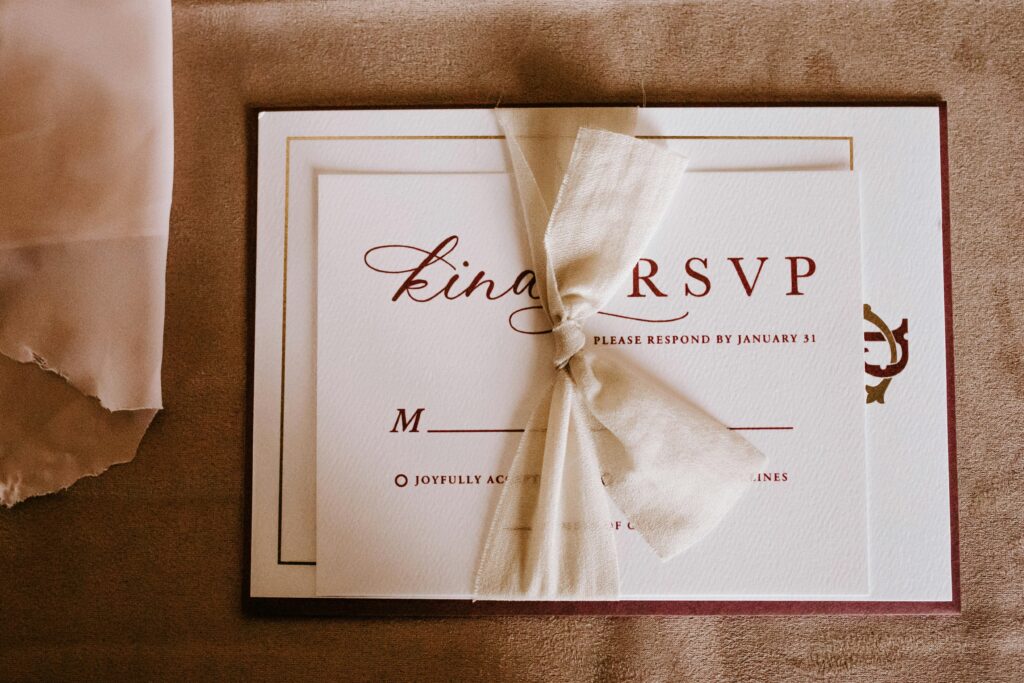
Photo by Tara Winstead
Why Event Invitations Matter More Than You Think
Event invitations are not just logistical tools. They are the first brand experience guests have with your event. Before attendees see the venue, interact with staff, or engage with presentations, they interact with the invitation. That moment shapes perception immediately.
In crowded professional environments, people receive dozens of event invitations every month. Most are digital. Most are ignored. Printed event invitations stand out because they demand attention and signal intent. They show that the event is important enough to warrant time, design, and production effort. That signal alone increases perceived value.
Event invitations also set expectations. A poorly designed invitation suggests a poorly organised event. A thoughtful, well-printed invitation suggests care, planning, and professionalism. Guests subconsciously carry those assumptions into the event itself.
At Kawaii Labs Corporate, event invitations are treated as strategic brand assets. They are designed to communicate quality, relevance, and intent long before guests arrive. A strong invitation does not simply announce an event. It prepares the audience emotionally and mentally for the experience ahead.
The Role of Print in Creating Memorability
Printed invitations activate senses digital formats cannot. Texture, weight, and finish all contribute to how an invitation is perceived. Thick stock feels important. Textured paper feels premium. Clean cuts and precise printing feel intentional.
This sensory experience makes invitations more memorable. People are more likely to keep a printed invitation on a desk, fridge, or noticeboard. That physical presence reinforces the event repeatedly over time. Each glance acts as a reminder, increasing attendance likelihood.
Print also slows interaction. Unlike emails that are skimmed and deleted, printed invitations are handled. They encourage reading rather than scanning. This increases message retention and emotional connection.
For high-value corporate events, launches, conferences, or VIP experiences, printed invitations often outperform digital invites in both response rate and perceived exclusivity.
Design Elements That Leave a Lasting Impression
Design begins with clarity. Guests should understand what the event is within seconds. The event name, purpose, and value proposition must be immediately visible. Decorative design should never obscure essential information.
Typography plays a critical role. Fonts should reflect brand personality while remaining legible. Overly stylised fonts reduce readability, especially for dates, venues, and times. Hierarchy matters. Headlines should dominate. Supporting information should follow naturally.
Colour choice sets tone. Neutral palettes communicate professionalism. Bold colours create energy. Muted tones suggest exclusivity. The invitation should visually match the type of experience guests can expect at the event.
Print finishes elevate perceived value. Foil stamping signals prestige. Embossing adds tactile interest. Spot UV highlights key elements without overwhelming the design. These finishes should be used selectively. Overuse cheapens the effect.
Paper choice must align with brand positioning. Luxury brands benefit from heavier, textured stock. Modern tech brands may prefer smooth, minimalist finishes. The goal is alignment, not decoration.
Writing Invitation Copy That Drives Attendance
Event invitations should answer three questions clearly:
What is this event?
Why should I attend?
What action do I need to take?
Many invitations fail because they rely on vague language. “Join us for an evening of insights” does not communicate value. Strong invitations highlight tangible benefits. Speakers, outcomes, networking opportunities, exclusive access, or learning objectives should be stated clearly.
Tone should match audience expectations. Corporate audiences respond to clarity and confidence. Overly casual language can undermine credibility. At the same time, overly formal language can feel distant. Balance is essential.
Calls to action must be obvious. RSVP instructions should be impossible to miss. Including QR codes or short URLs allows recipients to act immediately while preserving the tactile experience of print.
Aligning Invitations With the Overall Event Experience
Event invitations should never exist in isolation. They must align visually and tonally with the rest of the event materials. Signage, décor, programs, and follow-up communication should feel like extensions of the invitation.
This consistency reinforces brand trust. When the event experience matches the promise made by the invitation, credibility increases. When it does not, disappointment follows.
At Kawaii Labs Corporate, invitations are designed as the first chapter of the event story. Every decision made at the invitation stage supports what guests will see, feel, and experience later.
Long-Term Brand Value of Well-Designed Invitations
Even after an event ends, invitations continue to work. They influence how the brand is remembered. Guests associate the quality of the invitation with the quality of the experience. That association carries into future interactions.
In competitive markets, details matter. Well-designed event invitations differentiate brands quietly but powerfully. They communicate professionalism without saying it directly.
Event invitations that leave a lasting impression do not rely on trends. They rely on clarity, intention, and execution. When done correctly, they increase attendance, elevate perception, and set events up for success before the doors ever open.