
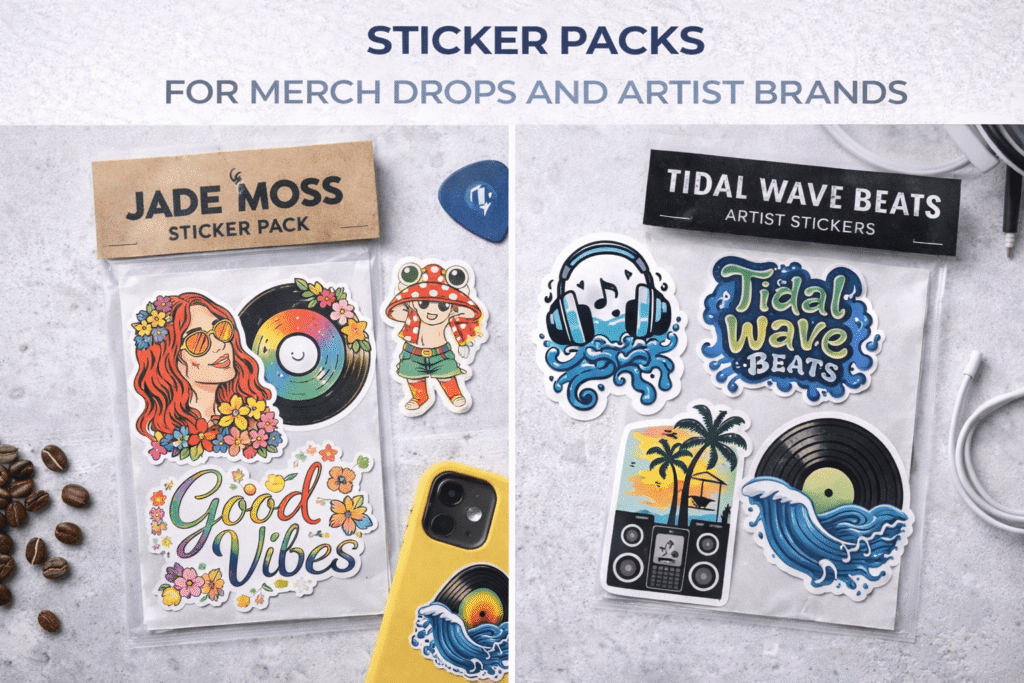
Photo by Kawaii Labs
Sticker packs have become a core component of modern merch drops and artist branding. Unlike single stickers or one-off freebies, curated packs create a sense of value, collectability, and intention. For artist brands, sticker packs for merch drops function as both a revenue product and a marketing asset, extending brand presence far beyond the initial sale.
The appeal of sticker packs lies in their portability. Stickers move easily from packaging to laptops, notebooks, water bottles, sketchbooks, instrument cases, and street infrastructure. Each placement becomes a secondary brand impression that costs nothing after production. This makes sticker packs especially powerful for artists and creators whose audiences value self-expression and personal curation.
Design strategy is the foundation of successful sticker packs for merch drops. A pack should feel cohesive without being repetitive. Each sticker should stand on its own while contributing to a larger visual system. This balance allows fans to use individual stickers independently while still recognising the set as part of a single brand world.
Variation within cohesion is key. Packs that include a mix of logo marks, characters, symbols, patterns, and experimental designs perform better than packs built around one repeated visual. This variety increases the likelihood that at least one sticker resonates strongly with the user, improving retention and placement.
Common Mistakes with Sticker Packs
Scale and size choices also influence usability. A well-designed sticker pack includes a range of sizes. Larger stickers work well as statement pieces, while smaller stickers fit into tighter spaces. Packs that offer only oversized or only tiny stickers limit placement options and reduce overall use. Sticker packs for merch drops should feel flexible rather than prescriptive.
Material quality directly affects brand perception. Vinyl is the preferred choice for artist sticker packs because it resists moisture, tearing, and fading. Fans are more likely to apply stickers permanently when they trust durability. Cheap materials create hesitation. A sticker that peels or degrades quickly reflects poorly on the artist and discourages future use.
Finish choice contributes to tone. Gloss finishes enhance colour saturation and visual punch, making them effective for bold or graphic-heavy styles. Matte finishes feel more tactile and understated, aligning well with minimalist or illustration-driven brands. The finish should reinforce artistic intent rather than follow trends.
Sticker packs also benefit from intentional theming. Packs built around an album release, tour, collection, or concept feel more meaningful than generic assortments. The theme provides narrative context, which increases emotional connection. Fans are more likely to keep and display stickers that feel tied to a moment or story.
Packaging plays a supporting role. Sticker packs do not require elaborate packaging, but presentation still matters. A simple branded sleeve or backing card protects stickers and frames them as a curated product rather than loose extras. Packaging also creates an unboxing moment that reinforces professionalism.
For merch drops, sticker packs offer strategic flexibility. They can be sold as standalone items, included as add-ons, or used as incentives for higher-tier purchases. This adaptability makes them useful across pricing tiers. Sticker packs for merch drops often act as entry-level products that introduce new fans to the brand at a low barrier.
Artist brands also benefit from the social visibility stickers generate. Stickers applied to personal items appear in public spaces, online photos, and shared environments. This organic exposure supports discovery in a way that paid advertising cannot replicate. Each sticker placement becomes a micro-endorsement by the fan.
Limited editions further increase perceived value. Numbered runs, exclusive designs, or drop-specific packs create urgency without requiring complex production changes. Because sticker packs are relatively low-risk to produce, artists can experiment with concepts and respond quickly to audience feedback.
Consistency across drops strengthens brand recognition. While designs evolve, core elements such as colour palettes, iconography, or recurring characters help fans identify the brand instantly. Sticker packs become visual signatures that reinforce identity over time.
From an operational perspective, sticker packs are scalable. Once designs and specifications are approved, reorders are straightforward. This supports repeat drops and restocks without extensive setup. For growing artist brands, this reliability is critical.
Sustainability considerations should not be ignored. While stickers are often synthetic, longevity mitigates waste. Durable stickers that remain in use reduce replacement frequency. Artists can also communicate care through material choice and restrained packaging rather than excessive add-ons.
Quality control is essential. Misaligned cuts, colour shifts, or inconsistent finishes stand out immediately. Because sticker packs are often judged closely, flaws are noticed. Sampling before full production protects both revenue and reputation.
Strategic production guidance improves outcomes, especially as volumes increase. Understanding material options, finishes, and cut styles helps artist brands avoid costly mistakes. Collaboration with partners like Kawaii Labs Corporate supports this process by aligning creative ambition with reliable production standards.
Timing also matters. Sticker packs tied to merch drops should be produced early enough to allow for refinement. Last-minute production often results in compromised quality or missed opportunities for cohesion with other merch items.
Ultimately, sticker packs for merch drops succeed because they invite participation. Fans choose where to place them, how to use them, and when to display them. That agency strengthens connection. When artist brands respect this dynamic and deliver quality, sticker packs become long-term ambassadors rather than short-term merchandise.
In the merch ecosystem, sticker packs occupy a unique position. They are affordable, expressive, and enduring. For artist brands focused on community, visibility, and sustained engagement, sticker packs are not extras. They are essential tools for building a brand that travels with its audience.