Photo by Kawaii Labs
Seasonal campaigns succeed or fail based on timing and relevance. Printing too early ties up budget and storage. Printing too late misses momentum. Seasonal promotional printing works best when brands align materials with customer intent at specific points in the calendar rather than treating seasons as decorative themes.
The first step is understanding seasonality as behaviour, not aesthetics. Seasons influence buying decisions, attention levels, and planning cycles. Print should respond to those shifts. Effective seasonal promotional printing supports how customers think and act at that time, not just how things look.
Planning Seasonal Promo Campaigns in Advance
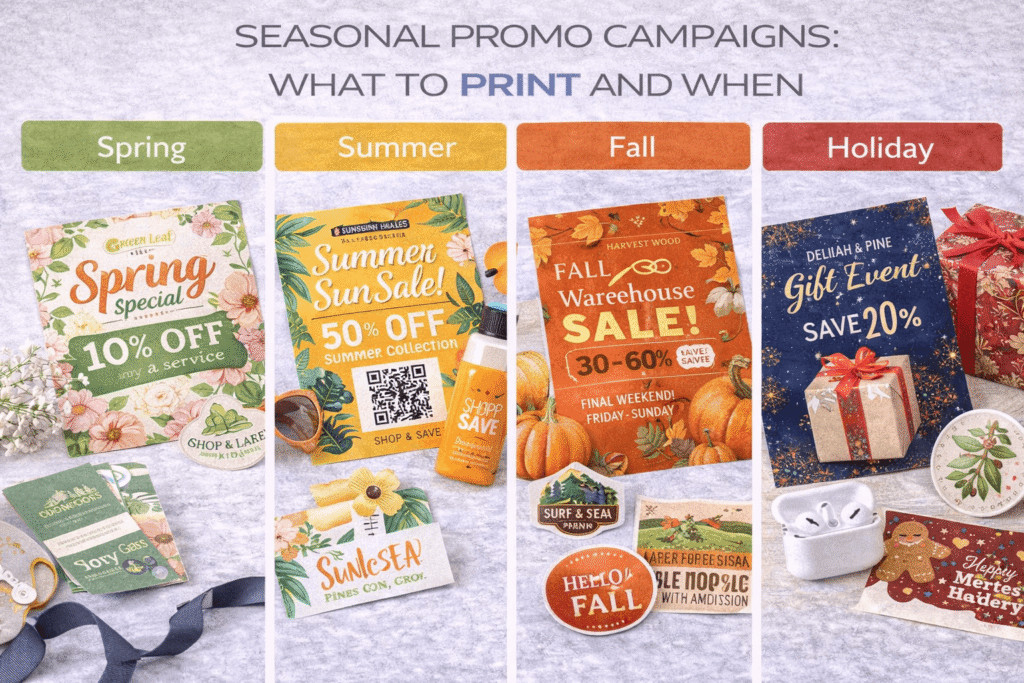
Early-year campaigns focus on reset and planning. From January through early March, audiences are goal-oriented and budget-conscious. Print materials that perform well in this period include planners, notebooks, wall calendars, onboarding kits, and informational print. Messaging should emphasise organisation, clarity, and long-term value. Overly promotional items often underperform during this phase.
Late summer and early autumn shift toward momentum. Businesses prepare for year-end targets, events, and procurement cycles. This is an ideal window for branded stationery, presentation folders, desk items, and client packs. Seasonal promotional printing during this period should support productivity and professionalism. Utility drives retention.
Event-heavy periods require fast, portable print. Trade shows, conferences, and activations peak at various points throughout the year. For these moments, samples, flyers, postcards, stickers, and compact giveaways perform best. Print should prioritise durability, clarity, and ease of carry. Seasonal relevance matters less than contextual usefulness.
Holiday periods require a different discipline. End-of-year campaigns are crowded and emotionally charged. Seasonal promotional printing must cut through without becoming excessive. Corporate gift packaging, printed cards, curated bundles, and restrained seasonal inserts perform better than novelty items. Subtlety often signals maturity during this time.
Planning lead times is critical. Seasonal printing is not reactive work. Artwork approval, material sourcing, production, and delivery all require buffer time. Brands that plan seasonal promotional printing at least eight to twelve weeks ahead avoid rush costs and compromised quality.
Print volume should align with campaign scope. Seasonal campaigns often tempt brands to overproduce. Excess stock becomes outdated quickly. Print quantities should be based on realistic distribution plans rather than optimistic projections. Controlled volume protects budget and reduces waste.
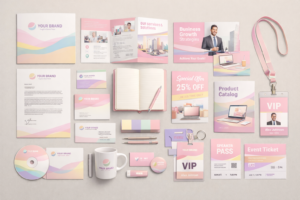
Consistency across seasons strengthens recognition. While messaging and formats may change, core brand elements should remain stable. Seasonal promotional printing should feel like variations within a system, not disconnected executions. Familiarity improves recall and reduces design friction.
Spring campaigns often benefit from light, flexible print. Inserts, mailers, and small-format collateral support product launches and announcements without heavy commitment. Messaging can focus on renewal, updates, or new offerings. Avoid overproduction during transitional seasons.
Mid-year campaigns are ideal for reinforcement. This is a strong period for loyalty materials, refill reminders, usage guides, and follow-up print. Seasonal promotional printing during mid-year supports retention rather than acquisition. These materials work quietly but deliver strong ROI.
Seasonal packaging changes should be handled modularly. Instead of redesigning entire packaging systems, brands can use sleeves, stickers, or printed inserts to introduce seasonal messaging. This approach controls cost while maintaining consistency. Modular print is one of the most efficient seasonal tools.
Weather-driven seasons also influence material choice. Outdoor promotions require durable inks and substrates. Humidity, heat, or cold can affect print performance. Seasonal promotional printing should account for environmental conditions to prevent degradation during use.
Regional seasonality matters. Campaign timing varies by market. Brands operating across regions should avoid assuming uniform seasons. Print calendars should reflect local behaviour rather than global assumptions. Misaligned timing reduces relevance.
Internal alignment improves execution. Marketing, sales, and operations should share a seasonal print calendar. This prevents duplicate orders, conflicting messages, and rushed decisions. Seasonal promotional printing works best when treated as part of an integrated plan rather than a marketing afterthought.
Measurement should focus on outcomes appropriate to the season. Early-year print may support onboarding or education. Mid-year print may support retention. Year-end print may support relationship strengthening. Evaluating all seasonal print by the same metric leads to poor decisions.
Sustainability should be considered across the calendar. Seasonal printing often increases volume. Brands should prioritise reusable formats, recyclable materials, and controlled quantities. Responsible seasonal promotional printing protects brand perception over time.
Storage and logistics are practical concerns. Seasonal items often require temporary storage. Packaging formats that store flat or nest efficiently reduce overhead. Print choices should consider post-production handling, not just appearance.
Flexibility is a strategic advantage. Campaigns change. Supply chains shift. Print systems that allow small updates without full reprints reduce risk. Variable data printing and modular components support adaptability across seasons.
Creative restraint improves longevity. Seasonal visuals should not overpower brand identity. Timeless design with subtle seasonal cues ages better than overt themes. This allows unused stock to remain usable if timelines shift.
Partner selection influences success. Print partners who understand seasonality help brands plan realistically. Strategic guidance on formats, quantities, and timelines prevents common mistakes. Collaboration with Kawaii Labs Corporate supports this approach by aligning seasonal campaign goals with practical print execution and long-term brand consistency.
Ultimately, seasonal promotional printing is about rhythm. Brands that print with intention, aligned to customer behaviour and calendar realities, achieve more with less. Those who chase seasons visually without strategic timing often waste budget and attention.
Knowing what to print matters. Knowing when to print matters more. When seasonal campaigns respect timing, purpose, and practicality, print becomes a reliable driver of relevance rather than a recurring scramble.