Photo by Pexels
Why Bundling Print Products Outperforms Single-Item Campaigns
Print campaigns often fail not because the individual pieces are poorly designed, but because they operate in isolation. A flyer is handed out. A brochure is printed. A business card is exchanged. Each item may be effective on its own, but when they are not connected, their impact is limited.
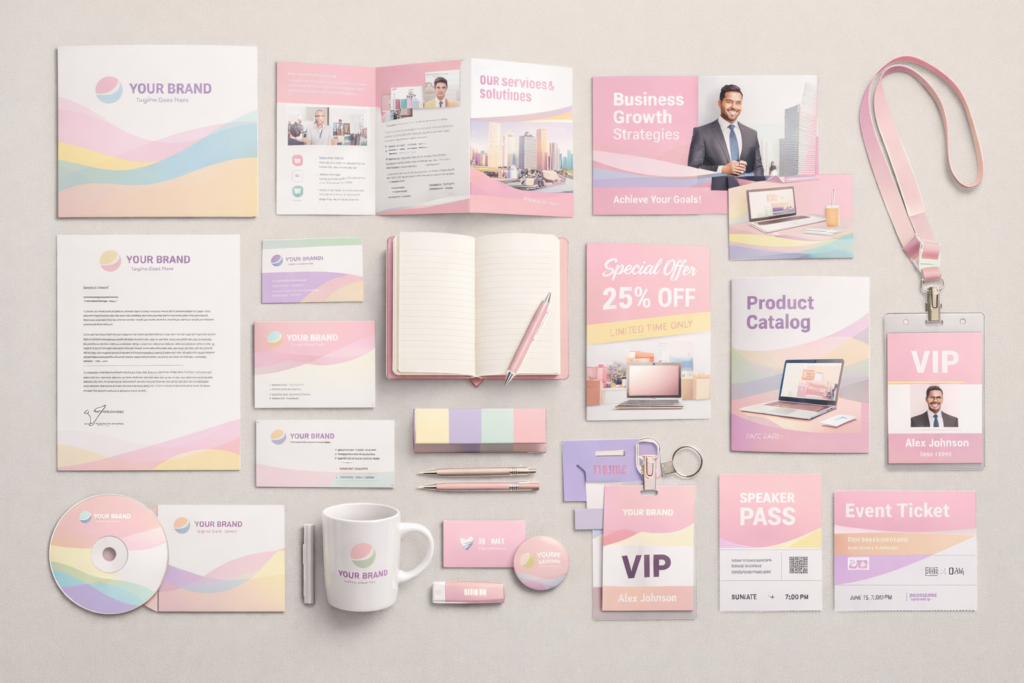
Bundling print products changes this dynamic. Instead of relying on one touchpoint to carry the entire message, bundling creates multiple, coordinated touchpoints that reinforce each other. This repetition increases visibility, improves recall, and extends the lifespan of a campaign.
Bundling print products is not about printing more for the sake of volume. It is about strategic layering. Each printed item plays a specific role in guiding attention, reinforcing messaging, and supporting action.
At Kawaii Labs Corporate, bundling print products is a system design exercise rather than a production checklist. The focus is on how different print formats work together to amplify reach.
How Bundled Print Products Increase Brand Exposure
Human attention is fragmented. People rarely act on a single exposure, especially in busy environments like events, retail spaces, or direct mail. Bundling print products increases the number of meaningful exposures without overwhelming the audience.
For example, a flyer may capture initial attention. A brochure may provide depth. A branded insert or card may remain on a desk for weeks. Together, these items create layered exposure across time.
Each piece reinforces the same brand elements: logo, colour, tone, and message. This repetition strengthens recognition. When people encounter the brand again, it feels familiar rather than new.
Bundling print products also increases the chance that at least one item will resonate. Different people engage differently. Some read. Some scan. Some keep physical reminders. Bundling accommodates these behaviours.
Common Print Bundles That Deliver Strong Results
Certain combinations of print products consistently perform well because they address different stages of attention and engagement.
Event Bundles
Event print bundles often include banners or backdrops for visibility, flyers or brochures for information, and business cards or QR cards for follow-up. The large-format print attracts attention. The smaller pieces support conversation and post-event action.
Direct Mail Bundles
Direct mail performs better when multiple elements are included. A personalised letter sets context. A flyer highlights the offer. A reply card or insert prompts action. Each element supports the others, increasing response rates.
Retail or In-Store Bundles
In-store print bundles may include signage, shelf talkers, and take-home materials. Signage attracts. Shelf materials inform. Take-home items extend engagement beyond the store visit.
Packaging Bundles
Packaging bundles combine outer packaging, inserts, thank-you cards, and informational print. The product experience becomes layered rather than transactional, improving perception and recall.
The key is cohesion. Bundled items must feel intentionally connected, not randomly assembled.
Designing Print Bundles With a Clear Hierarchy
Effective bundling requires hierarchy. Not all items should carry the same message or level of detail. Each piece has a role.
Primary items attract attention. These are often large-format or highly visible pieces. Secondary items provide information. Tertiary items support action or memory.
Without hierarchy, bundles feel cluttered. Too much information repeated across every item overwhelms the audience. Strategic bundling distributes information logically across formats.
Design consistency is critical. Fonts, colours, and layouts should align, but variation in scale and emphasis keeps the bundle visually interesting.
Cost Efficiency and ROI of Print Bundling
Bundling print products often improves cost efficiency. Printing multiple items together can reduce per-unit costs and setup fees. More importantly, bundling increases the effectiveness of each piece, improving return on investment.
A single flyer with a low response rate may feel inefficient. That same flyer, when paired with supporting materials, may perform significantly better. The cost increase is often marginal compared to the performance gain.
Bundling also reduces waste. Instead of printing large quantities of one item that may be discarded, smaller quantities of multiple items can be distributed more intentionally.
At Kawaii Labs Corporate, print bundling strategies are often used to balance budget constraints with performance goals.
Measuring the Impact of Bundled Print Campaigns
Bundled print campaigns are measurable when tracking is designed correctly. Each bundle can share a common call to action while using different entry points.
QR codes, landing pages, or promo codes can be consistent across the bundle to measure overall campaign performance. Alternatively, different codes can be used on different items to identify which elements drive the most engagement.
When measuring success, it is important to evaluate the bundle as a system rather than isolating individual items. The goal is not to identify a single “winner,” but to understand how the pieces work together.
Bundling often improves metrics such as response rate, dwell time, and conversion influence rather than immediate conversions alone.
Avoiding Common Bundling Mistakes
Several mistakes reduce the effectiveness of print bundles:
Including too many items without a clear role
Using inconsistent branding across pieces
Repeating identical content on every item
Failing to plan distribution properly
Ignoring how items will be physically handled
A successful bundle feels curated. A poor bundle feels like leftovers.
When Bundling Makes the Most Sense
Bundling print products is especially effective when campaigns involve multiple touchpoints or longer decision cycles. This includes B2B marketing, events, high-value products, and brand-building initiatives.
For very simple, low-stakes actions, bundling may not be necessary. However, even modest bundles often outperform single-item campaigns in terms of recall and perceived value.
Bundling Print as Part of an Integrated Strategy
Bundled print products work best when aligned with digital channels. Print drives awareness and trust. Digital supports immediacy and tracking. Together, they create a seamless experience.
For example, a printed bundle may direct users to a landing page, which then feeds into email or sales follow-up. Print initiates the journey. Digital continues it.
At https://corporate.kawaiilabs.com, print bundling is often designed alongside digital strategy to ensure consistent messaging and measurable outcomes.
Why Bundling Print Products Maximises Reach
Bundling print products increases reach by extending exposure, reinforcing messaging, and accommodating different engagement styles. It transforms print from a single moment into an ongoing presence.
Instead of relying on one piece to do all the work, bundling allows each item to do what it does best. Together, they create impact greater than the sum of their parts.
Final Thoughts on Bundling Print Products for Maximum Reach
Bundling print products is not about printing more. It is about printing smarter. When designed strategically, bundles improve visibility, recall, and response without unnecessary waste.
Print performs best when it works as a system rather than isolated outputs. Bundling creates that system.
By aligning formats, messaging, and distribution, brands can maximise reach and extract greater value from every printed piece. When print is bundled with intention, it becomes not just visible, but effective.