
Photo by Pixabay
Label finish is one of the most influential yet underestimated decisions in product branding. The choice between matte vs glossy labels affects how a product is perceived, how it performs in real-world conditions, and how well it supports long-term brand goals. While both finishes are widely used, they communicate very different messages and suit different applications.
For brands, the decision is not about which finish looks better in isolation. It is about which finish aligns with product use, brand positioning, and customer expectations. Matte vs glossy labels should be evaluated as strategic tools rather than decorative preferences.
Understanding the Difference Between Matte and Glossy Labels
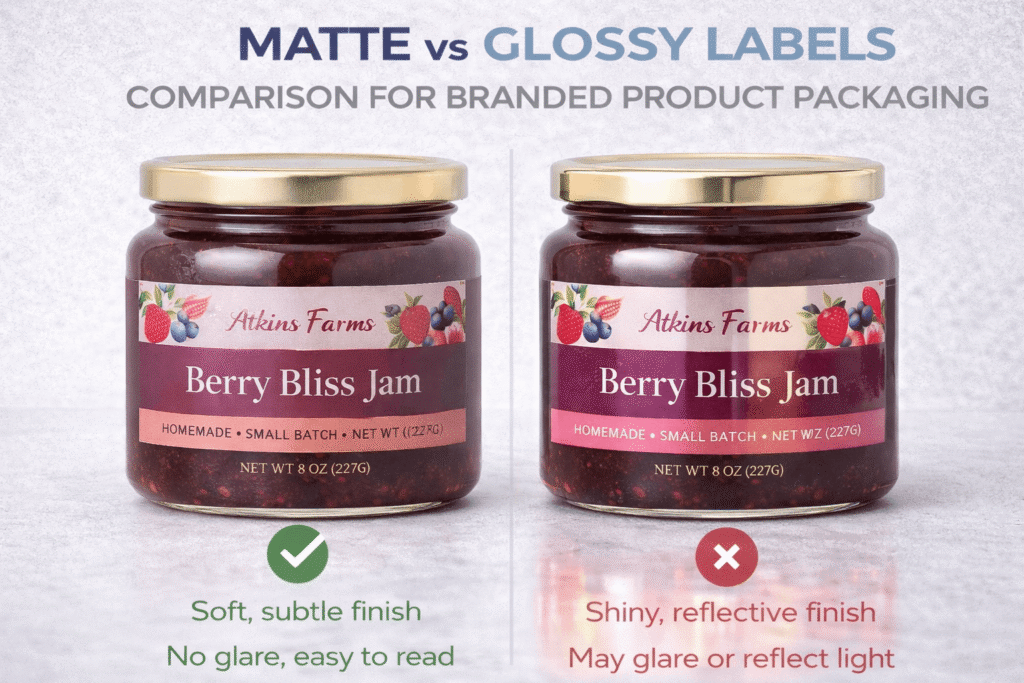
Glossy labels are often associated with vibrancy and visual impact. The reflective surface enhances colour saturation and contrast, making designs appear brighter and more dynamic. This finish performs well in environments where products compete for attention, such as retail shelves or promotional displays. High-gloss labels catch light easily, which can help products stand out at a distance.
Matte labels, by contrast, offer a more subdued and controlled appearance. Colours appear softer and more natural, and the surface diffuses light rather than reflecting it. This creates a refined, premium feel that many brands associate with quality and restraint. Matte finishes are commonly used by brands that prioritise credibility, craftsmanship, or minimalism.
Readability is a key consideration when comparing matte vs glossy labels. Glossy surfaces can produce glare under strong lighting, which may interfere with legibility. This is particularly relevant for products displayed under retail lights or photographed frequently. Matte labels reduce glare, making text easier to read from multiple angles. For information-heavy labels, this can significantly improve user experience.
Durability also differs between finishes. Glossy labels often include protective coatings that improve resistance to moisture, smudging, and abrasion. This makes them suitable for products exposed to handling, spills, or humid environments. Beverage containers, cosmetics, and cleaning products often benefit from glossy finishes because of their protective properties.
Matte labels, while still durable when produced correctly, can be more susceptible to scuffing or marking, especially without lamination. However, modern matte finishes with protective coatings can perform well in demanding conditions. The key is matching the label specification to the product’s real-world use rather than assuming matte equals fragile.
Brand perception is where matte vs glossy labels diverge most clearly. Glossy labels tend to feel energetic, bold, and commercial. They work well for products positioned as accessible, vibrant, or youthful. Matte labels communicate seriousness, confidence, and sophistication. They often feel more intentional and less promotional, which appeals to brands aiming for long-term trust rather than impulse appeal.
Finish choice also affects how branding elements are perceived. Logos, typography, and fine details behave differently on each surface. Glossy finishes can exaggerate contrast, which benefits bold graphics but may overwhelm subtle designs. Matte finishes support fine typography and restrained layouts by reducing visual noise. Brands with minimalist identities often find matte finishes more aligned with their visual systems.
Another practical consideration is handling and wear. Glossy labels show fingerprints, smudges, and scratches more easily due to their reflective surface. This can be a drawback for products handled frequently before purchase. Matte labels are more forgiving in this regard, maintaining a clean appearance even with repeated contact.
Photography and digital presentation also play a role. Products photographed for e-commerce or marketing materials behave differently depending on label finish. Glossy labels can create unwanted reflections that complicate lighting setups. Matte labels photograph more predictably, which simplifies content creation and ensures consistent visuals across platforms.
Cost is often assumed to be a deciding factor, but the difference between matte vs glossy labels is usually marginal when evaluated correctly. More important than unit cost is performance over time. A label that maintains appearance and legibility throughout the product lifecycle delivers better value than one that degrades or distracts.
Scalability should also be considered. Brands planning multiple product lines or variations benefit from consistency in finish. Choosing a finish that supports long-term expansion avoids unnecessary redesigns. Matte vs glossy labels should be selected with future growth in mind, not just current needs.
Sustainability considerations may influence finish choice as well. Some matte finishes use coatings that feel more natural and understated, aligning with eco-conscious positioning. However, sustainability depends more on material selection and longevity than finish alone. A durable label that stays intact reduces waste regardless of surface sheen.
Testing remains essential. Applying both finishes to actual packaging reveals differences that are not visible on screen. Lighting conditions, handling, and shelf context all influence perception. Brands that test before committing avoid misalignment between intent and reality.
Working with experienced print partners helps clarify these decisions. Professional guidance ensures that finish choice aligns with substrate, adhesive, and print method. Strategic input prevents costly mismatches between design and performance. This is where collaboration with Kawaii Labs Corporate supports informed decisions by balancing brand goals with production realities.
Ultimately, the question of matte vs glossy labels has no universal answer. The right choice depends on product category, brand personality, usage environment, and long-term strategy. Glossy labels excel when visibility and vibrancy are priorities. Matte labels excel when clarity, refinement, and restraint matter most.
Label finish is not a minor detail. It is a signal. Brands that choose intentionally communicate confidence and consistency. By evaluating matte vs glossy labels through the lens of use, perception, and longevity, businesses can select finishes that support both immediate impact and long-term brand value.