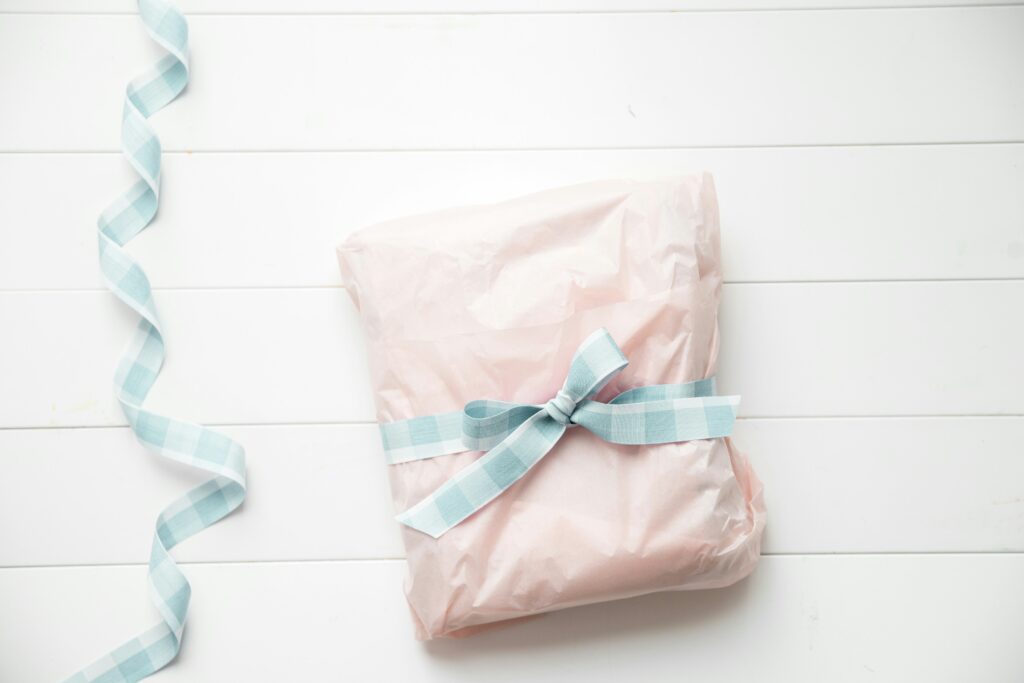
Photo by Katie Goertzen
Custom tissue paper packaging is one of the most understated yet powerful branding tools available to product-based businesses. It rarely takes centre stage, but it plays a critical role in shaping how a brand is perceived at a moment when customers are most attentive. Unlike outer packaging, tissue paper sits directly between anticipation and product reveal, making it a high-impact touchpoint.
In branding, small details often carry the most meaning. Custom tissue paper packaging signals intention. It shows that the brand has considered the experience beyond protection and logistics. This consideration builds trust quietly, without explanation or overt messaging.
One of the primary branding benefits of custom tissue paper packaging is perceived value. The same product feels more premium when revealed through a branded layer rather than generic wrapping. This perception is not driven by cost, but by cohesion. When packaging elements feel designed rather than assembled, customers assume higher standards across the brand.
Unboxing experiences rely heavily on pacing. Tissue paper slows the reveal, creating a deliberate pause. This pause increases anticipation and emotional engagement. Custom tissue paper packaging controls this moment, turning a functional layer into an experience element rather than filler.
Brand consistency is reinforced through repetition. Colour, logo placement, pattern, or subtle messaging on tissue paper extends the brand system inward. This continuity strengthens recognition. Even when outer packaging is neutral for cost or sustainability reasons, custom tissue paper packaging maintains brand presence inside.
Photography and social sharing benefit significantly. Tissue paper often appears in unboxing photos and videos. Branded tissue becomes part of user-generated content, increasing visibility without additional marketing spend. Custom tissue paper packaging that photographs well extends brand reach organically.
Subtlety is one of its strengths. Unlike loud exterior branding, tissue paper branding can be restrained. Tone-on-tone logos, repeating patterns, or minimal marks feel intentional and refined. This subtlety increases the likelihood that customers perceive the brand as confident rather than promotional.
Custom tissue paper packaging also supports storytelling. Seasonal designs, campaign patterns, or limited-edition prints allow brands to communicate context without adding inserts or cards. This approach keeps packaging uncluttered while still conveying relevance.
From a psychological perspective, inner packaging feels more personal. Customers interpret it as a brand speaking directly to them rather than to the public. This intimacy strengthens emotional connection and loyalty. Custom tissue paper packaging operates in this private moment, where perception is formed quietly.
Practicality should not be overlooked. Tissue paper protects products from scuffs, dust, and movement during transit. When protection and branding are combined into one element, efficiency improves. Custom tissue paper packaging performs dual roles without adding complexity.
Cost efficiency is another advantage. Compared to rigid packaging or specialty boxes, tissue paper offers a high branding return at relatively low cost. This makes it accessible for small businesses and scalable for larger operations.
Sustainability considerations are increasingly important. Many tissue paper options are recyclable, biodegradable, or made from recycled content. When aligned with brand values, custom tissue paper packaging supports sustainability narratives without overt claims. Customers often infer responsibility through material choice alone.
Consistency across orders matters. Tissue paper that appears in every shipment builds familiarity. Over time, customers begin to expect it. This expectation reinforces brand identity through repetition. Custom tissue paper packaging becomes part of the brand’s signature.
The tactile experience also influences perception. Soft, quality tissue feels different from thin, noisy paper. Texture contributes to the overall sensory impression. Custom tissue paper packaging that feels deliberate enhances perceived care.
Internal efficiency benefits as well. Branded tissue simplifies packing processes by reducing the need for additional branding elements. When used correctly, it replaces stickers, cards, or excess inserts rather than adding to them.
Execution quality remains critical. Poor print alignment, inconsistent colour, or low-quality paper undermines credibility. Custom tissue paper packaging must meet the same standards as other brand materials to deliver its full benefit.
Using Custom Tissue Paper Packaging as a Brand Asset
To maximise impact, custom tissue paper packaging should be treated as part of the brand system, not a decorative add-on.
Start with alignment. Tissue design should reflect existing brand colours, typography, and tone. Introducing unrelated visuals weakens cohesion rather than strengthening it.
Decide on branding density early. Some brands benefit from repeating patterns. Others benefit from a single, subtle mark. The choice should reflect brand personality and positioning.
Consider scale and coverage. Logos should remain visible without overpowering the product reveal. Balance matters more than size.
Plan for longevity. Avoid overly seasonal designs unless they serve a clear purpose. Timeless patterns increase usability across campaigns.
Test with real products. Tissue behaves differently depending on fold, size, and handling. Sampling reveals how designs appear when wrapped, not just laid flat.
Align sustainability choices with messaging. If sustainability matters to the brand, materials should reflect that value authentically.
Ensure supplier consistency. Colour variation or paper changes across batches disrupt recognition. Clear specifications protect consistency.
Integrate tissue paper into broader packaging strategy. It should complement boxes, mailers, and inserts rather than compete with them.
Working with experienced branding and print partners improves outcomes significantly. Material selection, ink behaviour, and print consistency all influence results. Collaboration with Kawaii Labs Corporate supports this process by aligning custom tissue paper packaging with brand systems, print quality, and scalable production.
Ultimately, custom tissue paper packaging succeeds because it operates in a moment of focus.
Customers are not scrolling, comparing, or multitasking. They are opening something they chose to receive. In that moment, details matter more than claims.
When used intentionally, custom tissue paper packaging transforms a simple layer of paper into a meaningful brand touchpoint that enhances perception, reinforces identity, and strengthens long-term connection.