
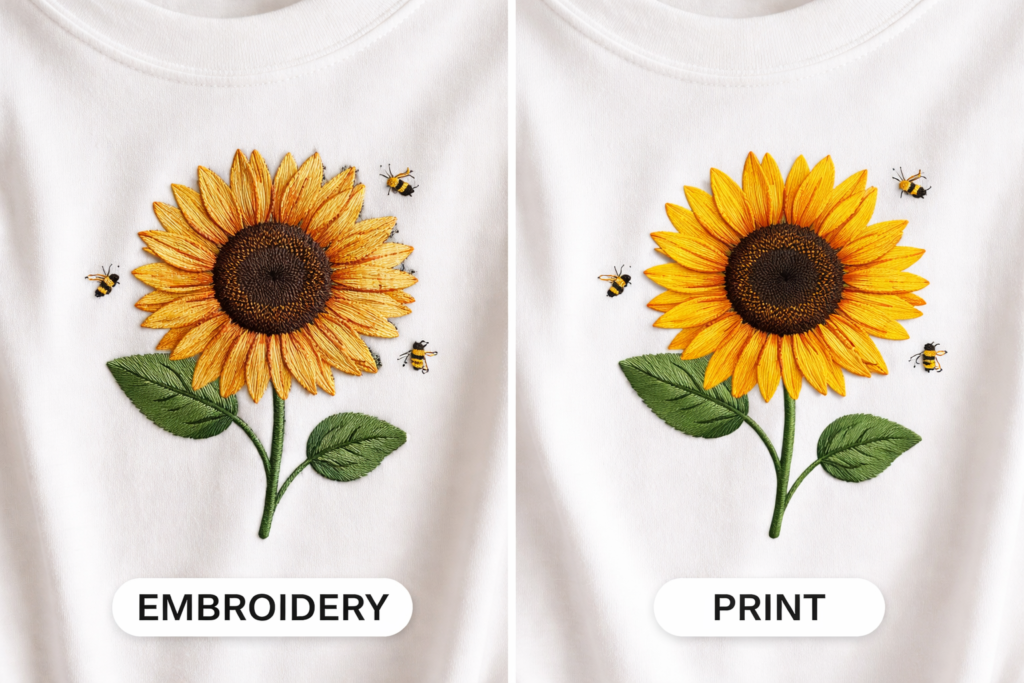
Photo by Pexels
Choosing between embroidery vs print is one of the most important decisions in branded apparel. It affects durability, appearance, comfort, cost, and how your brand is perceived over time. Many businesses treat this choice as purely aesthetic. In reality, it is strategic.
The wrong embellishment method can shorten garment lifespan, reduce wearability, or make a brand look mismatched to its environment. The right choice strengthens brand credibility every time the apparel is worn.
At Kawaii Labs Corporate, embroidery and print are not treated as interchangeable options. Each method serves different purposes and performs differently depending on fabric, usage, and brand positioning.
Understanding these differences ensures your branded apparel works as intended long after the first wear.
Understanding Embroidery on Apparel
Embroidery involves stitching a design directly into the fabric using thread. This creates a raised, textured finish that feels permanent and structured. Because the design becomes part of the garment, embroidery is widely associated with durability and professionalism.
Embroidery performs exceptionally well on thicker fabrics such as polos, jackets, hoodies, fleece, and caps. It withstands frequent washing and daily wear without fading or peeling. This makes it a strong choice for staff uniforms, corporate wear, and garments intended for long-term use.
Visually, embroidery conveys quality. The texture adds depth and subtlety, which aligns well with professional or premium brands. Logos appear refined rather than promotional, especially when stitched in neutral or tonal colours.
However, embroidery has limitations. Fine details, gradients, and very small text do not translate well into stitches. Large embroidered areas can feel heavy or stiff, reducing comfort. Embroidery also adds weight and can trap heat, which matters for warm environments.
Understanding Printed Apparel
Print methods apply ink or material onto the surface of the garment. This category includes screen printing, digital printing, and heat transfer. Printed apparel offers flexibility that embroidery cannot.
Print excels at reproducing detailed artwork, gradients, photographic images, and complex colour combinations. Large designs are easier to execute in print without adding weight or stiffness to the garment. This makes print ideal for promotional apparel, event T-shirts, and fashion-forward designs.
Printed apparel also offers lower setup costs for complex designs and faster turnaround times. For short-term campaigns or high-volume giveaways, print is often more cost-effective.
However, durability depends heavily on the print method and garment quality. Poor-quality print can crack, fade, or peel over time. Heat and frequent washing accelerate wear if the method is not suited to the fabric.
Printed designs also sit on top of the garment rather than becoming part of it. This affects feel and longevity, particularly for daily-use apparel.
Comparing Durability and Longevity
Durability is one of the biggest differences between embroidery and print. Embroidery generally outlasts print when garments are worn and washed frequently. It does not fade in the same way ink can, and it is resistant to cracking or peeling.
Print durability varies. Screen printing on quality garments can last well if cared for correctly. Digital prints and heat transfers may degrade faster, especially on low-quality fabrics or with heavy use.
If apparel is worn daily as part of a uniform, embroidery usually offers better long-term value. If apparel is worn occasionally or for a specific campaign, print may be sufficient.
Comfort and Wearability Considerations
Comfort directly affects how often apparel is worn. Embroidery adds texture and stiffness to the garment, particularly with larger designs. This can be uncomfortable on lightweight fabrics or in warm environments.
Print adds minimal weight and preserves fabric flexibility. This makes printed apparel more comfortable for T-shirts and lightweight garments.
Garment choice and embellishment method must align. Embroidering a thin cotton T-shirt often feels awkward. Printing on a heavy fleece jacket may look flat and underwhelming.
Brand Perception and Use Case
Embroidery is commonly associated with professionalism, authority, and longevity. It suits corporate environments, service teams, and staff-facing roles. Brands that want to appear established or premium often lean toward embroidery.
Print feels more casual and expressive. It suits creative brands, promotional campaigns, and youth-oriented audiences. Print allows for bolder statements and trend-driven designs.
Neither method is inherently better. The right choice depends on context.
Cost and Scalability
Embroidery typically has higher setup and per-unit costs, especially for large designs or multiple placements. However, its durability can reduce replacement costs over time.
Print is often more economical for large volumes and complex artwork. It scales well for events and promotions where lifespan is less critical.
Budget decisions should consider total cost of ownership, not just initial price.
Common Mistakes to Avoid
Choosing embroidery for highly detailed artwork
Using print for daily-use uniforms without durability planning
Ignoring fabric compatibility
Prioritising cost over wearability
Using one method across all apparel without considering purpose
Each mistake reduces the effectiveness of branded apparel.
How to Choose the Right Method for Your Apparel
Start by defining how the garment will be used. Consider frequency of wear, environment, audience, and brand positioning. Match the embellishment method to those realities.
At Kawaii Labs Corporate, embroidery and print are selected based on real-world use, not preference alone. Sometimes the best solution is a combination, using embroidery for uniforms and print for promotional pieces.
Final Thoughts: There Is No Universal Answer
Embroidery vs print is not a competition. It is a decision framework. Each method has strengths and limitations. When chosen correctly, both can deliver excellent results.
The best branded apparel aligns method, garment, and purpose. When those elements work together, the apparel looks better, lasts longer, and represents the brand more effectively.
Choosing the right embellishment method ensures your apparel works as hard as your brand does