Photo by RDNE Stock project
Event freebies are often treated as disposable. Bags are packed quickly, items are collected casually, and many products are forgotten before the event ends. Branded event stickers are one of the few giveaway items that consistently escape this pattern. When designed and produced correctly, they travel beyond the event, extend brand visibility, and deliver long-term value at a low cost per impression.
Why Stickers Work So Well as Event Freebies
The effectiveness of branded event freebie stickers depends on intention. Stickers are not successful because they are cheap. They succeed because they are flexible, portable, and easy to integrate into everyday environments. Laptops, notebooks, water bottles, phone cases, and packaging all become secondary brand placements when stickers are well executed.
The first consideration when making branded event freebie stickers is purpose. Stickers should not attempt to explain the brand or promote an offer. Their role is recognition, not conversion. Simple brand marks, icons, or short visual cues perform better than text-heavy designs. At events, attention is fragmented. Stickers must communicate instantly.
Design clarity is critical. High-contrast colour combinations improve visibility in varied lighting conditions. Clean shapes reproduce better at small sizes and age more gracefully over time. Overly detailed artwork may look impressive on screen but loses impact when printed small or viewed at a distance. Branded event freebie stickers should be legible from arm’s length.
Shape selection influences both appeal and durability. Rounded shapes such as circles or soft rectangles resist peeling better than sharp corners. Custom die-cut shapes can add personality, but they must still support clean edges and easy application. Complex shapes increase failure points, especially in outdoor or high-handling environments.
Material choice determines whether a sticker becomes a long-term brand asset or a short-lived giveaway. Vinyl is the preferred material for event stickers because it resists moisture, tearing, and fading. Paper stickers may be suitable for indoor, short-term use, but they degrade quickly once exposed to water or friction. For events, durability should always outweigh marginal cost savings.
Adhesive quality is another decisive factor. Branded event stickers must adhere securely to common surfaces without curling or lifting. At the same time, they should not leave excessive residue when removed. Balanced adhesive strength improves user confidence and increases the likelihood of application. People hesitate to apply stickers that feel unreliable.
Finish choice affects both perception and use. Gloss finishes enhance colour vibrancy and attract attention, which can be useful in busy event environments. Matte finishes reduce glare and fingerprints, making them popular for laptop and notebook application. The finish should align with brand tone and expected placement rather than trend.
Size strategy matters more than many brands realise. Stickers that are too large feel intrusive and are less likely to be used. Stickers that are too small lose visibility. Mid-sized stickers that fit naturally on personal items tend to perform best. Branded event stickers should feel like an addition, not an imposition.
Quantity planning should focus on reach rather than volume. Handing out thousands of poorly designed stickers delivers less value than distributing fewer, high-quality ones that people actually keep. Event freebies succeed when recipients choose to use them. That choice is driven by design, quality, and relevance.
Placement context should inform design decisions. Event freebie stickers are often applied in informal, personal spaces. This requires restraint. Loud slogans or overt sales messaging reduce adoption. Subtle branding, icons, or brand patterns integrate more naturally into personal environments. The goal is to be present, not dominant.
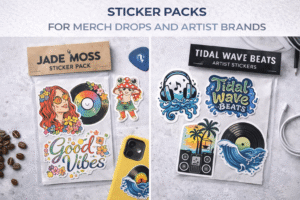
Packaging can enhance perceived value. Loose stickers often feel disposable. Including stickers in a small sleeve, envelope, or pack signals intention. Packaging also protects stickers from bending or damage during distribution. Even minimal presentation improves how freebies are perceived.
Branded event freebie stickers also perform well as part of bundles. Pairing stickers with notebooks, tote bags, or other practical items increases the likelihood that they will be noticed and used. Bundling supports narrative without requiring complex messaging. Stickers reinforce identity while other items deliver utility.
Consistency with broader brand systems is essential. Stickers should reflect existing brand elements such as colour palettes, typography, and iconography. Event-specific designs can still align with core identity. This ensures that brand recognition carries beyond the event rather than creating one-off visuals.
Sustainability considerations influence perception. Durable stickers that stay in use longer reduce waste compared to disposable alternatives. Brands should prioritise longevity over novelty. An event freebie sticker that remains on a laptop for years delivers far more value than multiple items discarded after the event.
Testing should not be skipped. Sample stickers applied to common surfaces reveal issues with adhesion, finish, and colour. Testing under realistic conditions prevents distribution of items that fail quickly. This step protects brand credibility at a critical public touchpoint.
Working with experienced print partners improves outcomes significantly. Strategic guidance ensures that material, adhesive, finish, and design choices align with event realities. Collaboration with Kawaii Labs Corporate supports informed decisions by focusing on durability, usability, and long-term brand impact rather than short-term cost.
Timing also matters. Producing event freebie stickers well in advance allows for refinement and avoids last-minute compromises. Events are high-visibility moments. Poorly executed freebies reflect poorly on brand preparedness and attention to detail.
Ultimately, branded event stickers succeed because they invite participation. People choose where to place them. That choice is earned through quality and design. When brands respect that dynamic, stickers become one of the most effective event freebies available.
In event marketing, the best giveaways are the ones that keep working after the doors close. Branded event stickers, when made with intention, continue representing the brand in places no booth or banner can reach.