
Photo by Pexels
Sublimation is often chosen for its ability to deliver vibrant colour, permanent results, and a premium finish. However, achieving consistent outcomes depends on more than the print method itself. Sublimation product quality is influenced by a combination of materials, preparation, process control, and production discipline. When any one of these elements is compromised, the final product reflects it immediately.
Unlike some surface print methods, sublimation does not allow for easy correction after production. The dye becomes part of the substrate, which means mistakes are permanent. For brands investing in long-term visibility, understanding quality considerations is essential to protect both budget and reputation.
Why Product Quality Matters in Sublimation Printing
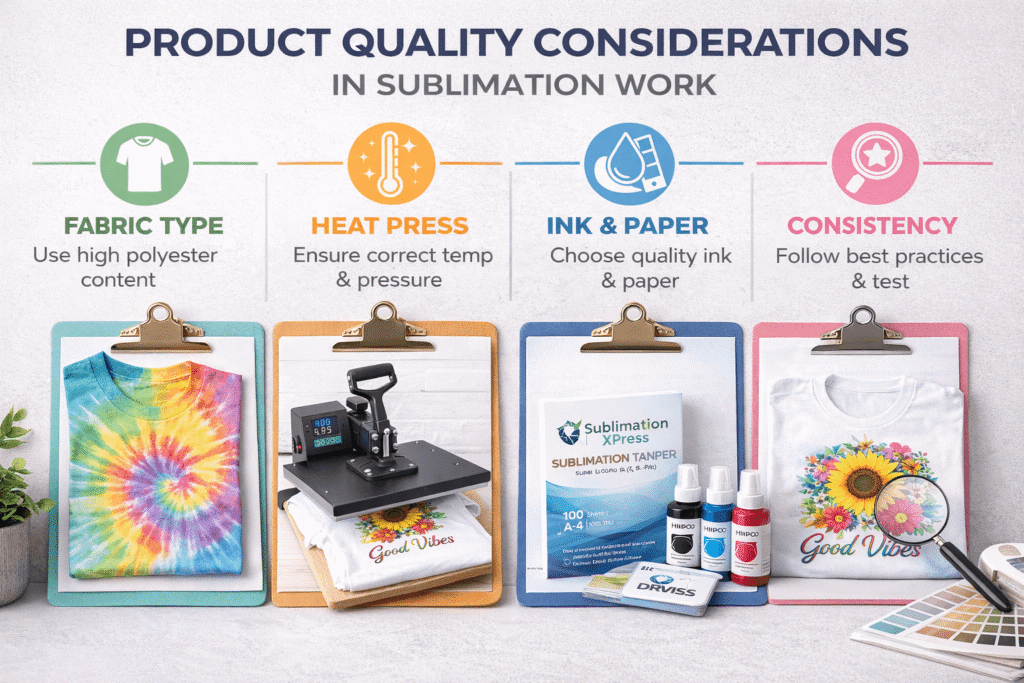
Substrate selection is the foundation of sublimation product quality. Sublimation works best on polyester fabrics or polymer-coated hard goods. The coating quality directly affects colour vibrancy, sharpness, and longevity. Inconsistent or low-grade coatings result in muted colours, uneven transfer, or premature fading. Even when products appear similar, variations in coating thickness or composition can produce noticeably different results.
Fabric composition matters just as much in textile applications. High polyester content ensures proper dye bonding. Blended fabrics with lower polyester percentages reduce colour intensity and durability. While sublimation can technically be applied to certain blends, brands must accept the trade-off in performance. Quality-focused sublimation work prioritises materials designed specifically for the process.
Colour management is another critical factor. Sublimation relies on accurate colour profiling across software, printer, ink, paper, and substrate. Without calibrated profiles, colours shift unpredictably. What looks correct on screen may appear dull, oversaturated, or incorrect in print. Consistent sublimation product quality requires controlled colour workflows and ongoing monitoring, especially for brand-critical colour palettes.
Heat and pressure control play a decisive role in quality outcomes. Sublimation requires precise temperature, dwell time, and pressure settings. Too little heat prevents full dye transfer. Too much heat causes colour distortion, scorching, or substrate damage. Uneven pressure leads to patchy results or ghosting. Quality production environments treat these variables as fixed standards, not estimates.
Moisture control is often overlooked but has a direct impact on sublimation product quality. Residual moisture in fabrics or coated items interferes with dye transfer, causing uneven colour or blurred edges. Pre-pressing materials removes moisture and stabilises the surface. Skipping this step introduces avoidable defects that compromise the final product.
Transfer paper and ink quality also influence results. Low-grade inks may produce inconsistent colour density or reduced lightfastness. Poor-quality transfer paper can retain ink instead of releasing it fully, resulting in dull prints. High-quality sublimation work depends on materials designed to work together as a system rather than mixed components chosen for cost alone.
File preparation affects perceived quality as much as production settings. Low-resolution artwork, incorrect colour modes, or missing bleed allowances result in soft edges and compromised detail. Designs intended for sublimation should be prepared with final product scale and substrate behaviour in mind. Quality issues often originate at the design stage rather than on the press.
Consistency across production runs is a major quality consideration for brands running ongoing programmes. Sublimation product quality must remain stable from batch to batch. This requires documented settings, approved substrates, and controlled workflows. Without standardisation, repeat orders produce visible variation, which undermines brand consistency.
Durability is one of sublimation’s strongest advantages when executed correctly. Quality sublimation does not crack, peel, or fade under normal use. However, durability is only achieved when the correct materials and processes are used. Inferior coatings or incorrect heat settings reduce lifespan significantly. A product that fails early damages brand perception more than a short-lived promotional item.
Quality also affects user experience. Sublimation should never alter the feel or function of the product. On textiles, the absence of texture supports comfort and breathability. On hard goods, the surface should remain smooth and usable. Poor-quality sublimation can introduce warping, surface residue, or distortion, reducing usability and retention.
Inspection and quality control are essential steps that cannot be skipped. Finished products should be checked for colour accuracy, alignment, clarity, and surface integrity. Because sublimation defects are permanent, catching issues before distribution prevents brand damage. Quality-focused operations treat inspection as part of production, not an optional add-on.
Production experience plays a significant role in maintaining standards. Sublimation requires understanding how different substrates behave under heat and pressure. Experienced operators recognise early signs of failure and adjust processes accordingly. This expertise reduces waste and improves consistency, especially at scale.
Strategic guidance further improves outcomes. Not every product is suitable for sublimation, even if it can technically be printed. Choosing the wrong application leads to compromised results. Working with knowledgeable partners helps brands apply sublimation where it delivers genuine value. This is where collaboration with Kawaii Labs Corporate supports informed decision-making by aligning product selection, design intent, and production reality.
Planning timelines also affect quality. Rushed production increases error rates and reduces testing opportunities. Allowing time for sampling, refinement, and approval protects quality and reduces rework. Sublimation rewards preparation and punishes shortcuts.
Ultimately, sublimation product quality is the result of discipline rather than technology alone. The method is capable of excellent results, but only when supported by the right materials, controlled processes, and experienced oversight. Brands that prioritise product quality considerations achieve products that remain visible, usable, and credible over time.
In sublimation work, product quality is not an enhancement. It is the baseline requirement for long-term brand value.