
Photo by Pixabay
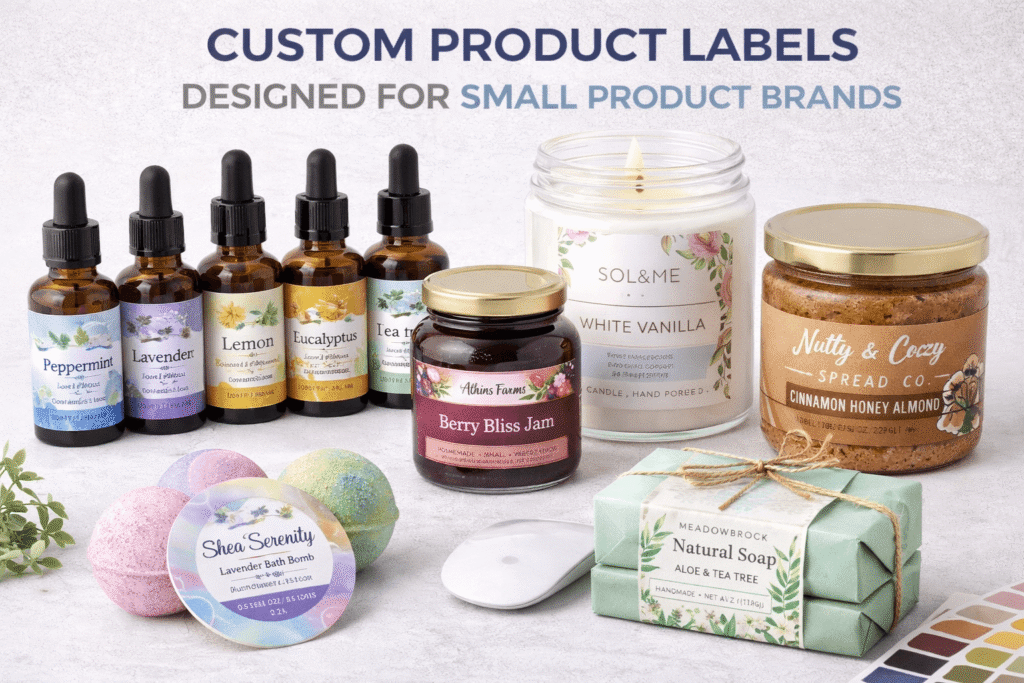
For small product brands, labels do far more than display information. They communicate credibility, reinforce brand identity, and influence purchasing decisions at the point of contact. Custom product labels are often the first physical interaction a customer has with a brand, which makes their quality and clarity critical. Poorly designed or cheaply produced labels undermine trust before the product is even used.
Why Custom Labels Matter for Small Product Brands
Small brands face unique challenges. Budgets are limited, production runs are smaller, and consistency must be maintained across growth phases. Custom product labels offer a way to control brand presentation without requiring large-scale packaging investments. When designed strategically, labels allow small brands to compete visually with established players.
One of the primary roles of custom product labels is brand recognition. Colour, typography, layout, and finish all contribute to how a product is perceived. Consistent label design across a product range creates familiarity, which builds trust over time. Even when products differ, a cohesive label system signals professionalism and intention.
Material selection plays a significant role in label effectiveness. Paper labels may work well for short-term use or dry environments, while vinyl or synthetic labels are better suited to products exposed to moisture, heat, or handling. Small product brands must match label material to real-world use. A label that curls, fades, or peels quickly damages brand perception regardless of how good the product itself may be.
Adhesive quality is equally important. Labels must stay in place for the product’s entire lifecycle. Weak adhesives lead to lifting edges and misalignment, which make products look unfinished. For small brands, consistency in adhesion reduces waste and rework, protecting margins and maintaining presentation standards.
Custom product labels also support flexibility. Instead of investing in fully printed packaging, brands can use neutral containers paired with custom labels. This allows for easier updates, variations, and testing. Seasonal editions, limited runs, or regulatory changes can be managed by adjusting labels rather than redesigning entire packages. This adaptability is especially valuable for growing brands refining their product offerings.
Information hierarchy is a critical design consideration. Labels must balance branding with required information such as ingredients, usage instructions, or compliance details. Overcrowded labels reduce readability and perceived quality. Effective custom product labels prioritise clarity, guiding the eye through essential details without overwhelming the design.
Finish choices influence perception more than many small brands realise. Matte finishes often communicate premium positioning and reduce glare, while gloss finishes enhance colour vibrancy and visibility. Specialty finishes such as soft-touch or spot treatments can elevate perception when used sparingly. The key is alignment with brand positioning rather than decoration for its own sake.
Durability is another important factor. Products that are handled frequently or stored for long periods require labels that maintain legibility over time. Ink quality, lamination, and print method all affect how well labels age. Custom product labels should be evaluated not just on day one appearance, but on how they look weeks or months later.
Scalability must be considered from the start. As small brands grow, label systems should support increased volume without requiring complete redesigns. Standardised label sizes, consistent layouts, and repeatable print processes make reordering efficient. This reduces friction as demand increases and supports consistent brand presentation.
Cost control is a common concern. While it may be tempting to choose the cheapest label option available, this often results in higher long-term costs due to waste, reprints, or damaged perception. Custom product labels should be evaluated on total value rather than unit price alone. Labels that perform well reduce product returns, improve shelf appeal, and support brand loyalty.
Sustainability is increasingly relevant, even for small brands. Material choices, waste reduction, and longevity all contribute to environmental impact. Durable labels that stay intact reduce the need for replacement. Minimal material use and recyclable options align with modern expectations without requiring complex changes. Sustainability signals responsibility, which strengthens brand credibility.
Testing is an essential step that small brands should not skip. Sample labels applied to actual packaging reveal issues that are not visible on screen. Fit, adhesion, readability, and finish can all be assessed before committing to full runs. Testing protects both budget and reputation.
Working with experienced production partners improves outcomes significantly. Guidance on materials, finishes, and print methods helps small brands avoid costly mistakes. Strategic input ensures that label choices align with product use and brand goals. This is where collaboration with Kawaii Labs Corporate supports informed decisions by balancing creative intent with production practicality.
Regulatory compliance is another area where custom product labels add value. Clear, accurate information reduces risk and builds trust. Labels that accommodate required details without compromising design demonstrate professionalism and preparedness.
Ultimately, custom product labels are not just identifiers. They are brand assets. For small product brands, labels often carry the full weight of brand communication. When designed with intention, produced with quality, and aligned with real-world use, they elevate perception and support growth.
Small brands that invest in thoughtful label systems position themselves for longevity. Custom product labels provide control, flexibility, and credibility at every stage of growth. In competitive markets, how a product is presented can be just as important as what is inside.