
Photo by Pexels
Why the Outsource vs In-House Decision Matters
Deciding whether to outsource printing or handle it in-house is not just an operational choice. It directly affects brand quality, turnaround times, internal workload, and long-term costs. Many businesses default to one option without evaluating whether it still serves their current needs.
In-house printing offers control and immediacy. Outsourcing offers expertise, scalability, and consistency. Neither option is universally better. The right decision depends on volume, complexity, brand standards, and strategic priorities.
Problems arise when businesses keep printing in-house out of habit, or outsource purely for convenience without considering impact. Both scenarios can lead to wasted budget, inconsistent output, or delayed campaigns.
At https://corporate.kawaiilabs.com, the decision to outsource vs in-house print is framed around performance and brand protection rather than convenience alone.
Understanding In-House Printing
In-house printing typically involves desktop printers, small-format digital machines, or basic finishing equipment. It is commonly used for internal documents, short-run materials, or quick-turn items.
The biggest advantage of in-house print is speed. Simple items can be produced immediately without external coordination. This is useful for internal signage, draft materials, or last-minute updates.
In-house printing also provides direct control. Teams can make changes quickly and experiment without additional setup costs. For small volumes and low-risk materials, this flexibility can be valuable.
However, in-house printing has clear limitations. Equipment quality restricts output size, colour accuracy, and finishing options. Maintenance, consumables, calibration, and staff time all add hidden costs.
Most importantly, in-house printing often struggles to meet professional brand standards consistently. Colour shifts, paper limitations, and uneven finishing become noticeable when materials are customer-facing.
Understanding Outsourced Printing
Outsourced printing involves working with a professional print partner who handles production using commercial-grade equipment and expertise. This option is best suited for branded materials, large volumes, and anything representing the brand publicly.
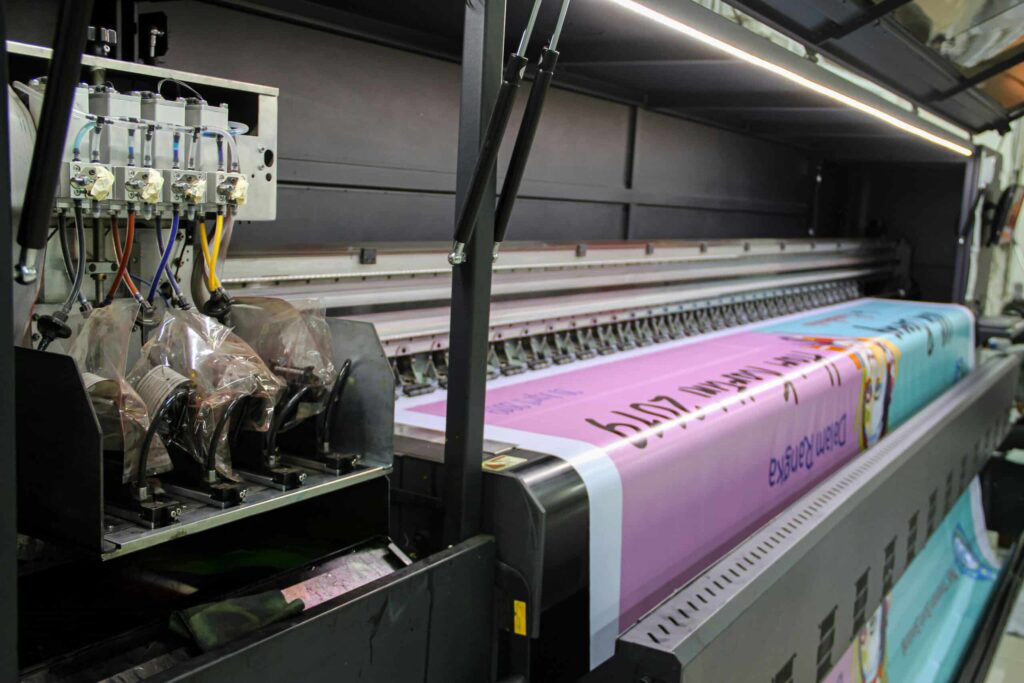
Outsourcing provides access to higher-quality output, wider material options, and advanced finishes. Large-format print, packaging, apparel, signage, and high-volume runs are difficult or impossible to replicate in-house without significant investment.
Consistency is a major advantage. Professional printers use colour management systems, quality control processes, and repeatable workflows that protect brand integrity across jobs and time.
Outsourcing also removes operational burden. Staff are not responsible for machine maintenance, troubleshooting, or supply management. This allows internal teams to focus on strategy rather than production.
The trade-off is lead time. Outsourced print requires planning. Rush jobs can be accommodated, but they should not be the norm.
When In-House Printing Makes Sense
In-house print is most effective when the materials are low-risk and internal-facing. Examples include internal notices, draft proofs, temporary signage, and short-run documents.
It also works well when volumes are very small and turnaround must be immediate. Printing a handful of pages for internal use does not justify external coordination.
In-house printing can support prototyping. Teams can test layouts or messaging before committing to professional production.
However, once materials leave the building or represent the brand externally, the risks increase significantly.
When Outsourcing Is the Better Choice
Outsourcing is the better option for anything that affects brand perception. This includes marketing collateral, event materials, signage, packaging, uniforms, and promotional items.
High-volume printing almost always benefits from outsourcing. Professional equipment produces better results at scale and lowers per-unit costs over time.
Complex jobs also require outsourcing. Multiple finishes, specialised materials, colour accuracy, or durability requirements are difficult to manage in-house.
Outsourcing is especially critical when consistency matters. Repeating the same material across campaigns, locations, or time periods requires controlled processes that most in-house setups cannot support.
At Kawaii Labs Corporate, outsourced print is positioned as a brand safeguard. It ensures that what customers see aligns with how the brand intends to be perceived.
Cost Considerations Beyond Price
Many businesses assume in-house print is cheaper because they already own the equipment. This assumption often ignores hidden costs.
In-house printing includes:
- Equipment depreciation
- Ink or toner costs
- Paper waste
- Maintenance and repairs
- Staff time
Outsourced printing includes:
- Production costs
- Setup fees
- Shipping or delivery
When evaluated properly, outsourced print is often more cost-effective for branded materials because it reduces waste, reprints, and quality issues.
Cost should be evaluated per usable outcome, not per printed page.
Quality and Brand Risk
Brand risk is one of the most important factors in this decision. Inconsistent print quality damages credibility. Customers may not consciously identify the issue, but they feel the difference.
Outsourcing reduces brand risk by ensuring professional standards. Colour accuracy, finishing quality, and material choice are controlled and repeatable.
In-house printing increases risk when used beyond its intended scope. What begins as a cost-saving measure can quickly become a brand liability.
Scalability and Growth
As businesses grow, print needs evolve. What worked for a small team may not work at scale. In-house setups often struggle to adapt to increased volume or complexity.
Outsourced print scales naturally. Professional partners can increase capacity, support new formats, and maintain standards as demand grows.
This scalability is essential for brands planning expansion, multi-location rollouts, or increased campaign activity.
Hybrid Models: Using Both Strategically
The most effective approach is often hybrid. In-house print handles internal, low-risk materials. Outsourced print handles branded, customer-facing, and large-scale projects.
Clear guidelines define which materials belong where. This prevents misuse of in-house equipment and protects brand quality without sacrificing agility.
At https://corporate.kawaiilabs.com, many clients adopt hybrid models to balance speed, cost, and consistency.
Common Mistakes to Avoid
Several mistakes weaken print strategy decisions:
Using in-house print for branded materials
Outsourcing everything without urgency planning
Ignoring hidden in-house costs
Choosing based on price alone
Failing to reassess as needs change
Avoiding these mistakes ensures print supports, rather than undermines, brand goals.
Final Thoughts on Outsource vs In-House Print
The decision to outsource vs in-house print should be intentional, not habitual. Each option has a role, but those roles must be clearly defined.
In-house print supports speed and flexibility for internal needs. Outsourced print protects quality, consistency, and brand perception in the real world.
When the right work goes to the right place, print becomes efficient, reliable, and aligned with business goals. Choosing wisely ensures print works as a strategic asset rather than a recurring problem.