
Photo by Christy Castillo
Brand evolution vs rebranding is a distinction many businesses misunderstand, yet the difference has significant strategic implications. Choosing the wrong approach can confuse audiences, weaken trust, and waste resources. Choosing the right one strengthens recognition, supports growth, and protects brand equity.
At a surface level, both processes involve change. However, the nature, intent, and impact of that change are fundamentally different. Understanding this difference requires looking beyond visuals and into how brands live in the minds of customers.
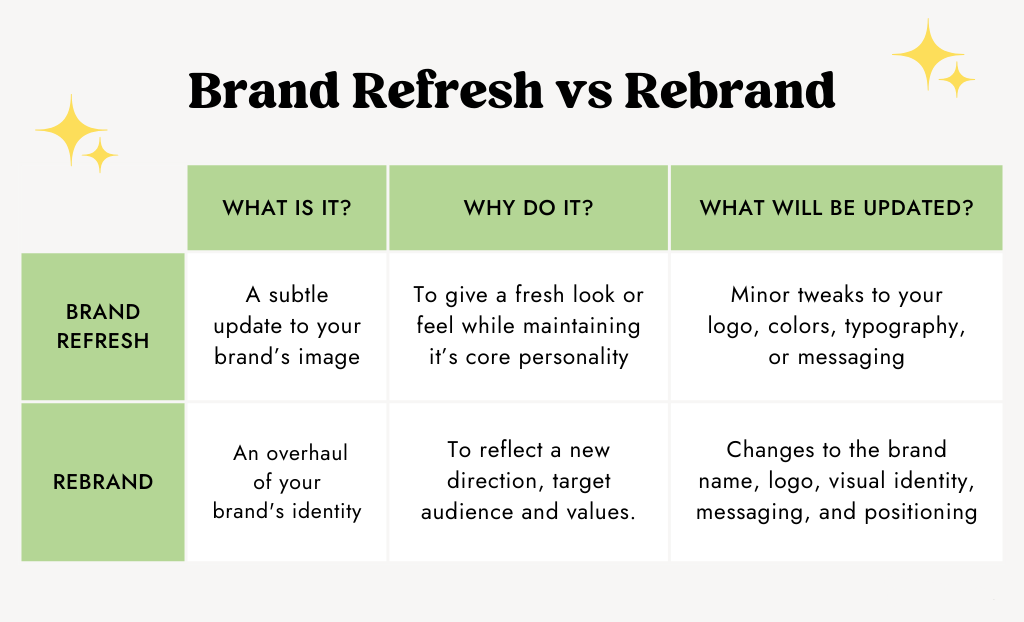
Brand evolution is incremental. It refines what already exists. Rebranding is transformative. It replaces or fundamentally resets how a brand is perceived. The mistake businesses often make is treating these as interchangeable design exercises rather than strategic decisions.
Brand evolution focuses on continuity. It assumes the brand is fundamentally sound but needs adjustment to remain relevant. This may involve refining visual identity, updating typography, modernising colour palettes, clarifying messaging, or improving consistency across touchpoints. The core idea remains intact.
Rebranding, by contrast, signals a shift in direction. It is used when the existing brand no longer represents the business accurately or effectively. This could be due to changes in audience, offering, market position, reputation, or business model. Rebranding often involves a new name, new positioning, new visual identity, and new messaging framework.
From the customer’s perspective, brand evolution feels familiar. It creates a sense of progression rather than disruption. Rebranding feels noticeable and deliberate. It asks customers to relearn who the brand is.
Risk levels differ significantly. Brand evolution carries lower risk because it builds on existing recognition. Rebranding carries higher risk because it resets mental associations. This does not mean rebranding is wrong. It means it must be justified.
One of the clearest indicators is trust. If customers trust the brand but perceive it as dated or inconsistent, brand evolution is usually appropriate. If customers misunderstand, distrust, or avoid the brand due to its current identity, rebranding may be necessary.
Internal alignment often drives the decision incorrectly. Leadership may feel disconnected from the brand, but internal dissatisfaction alone does not justify rebranding. The key question is external perception. Brand evolution vs rebranding decisions should be guided by how the market experiences the brand, not how teams feel about it.
Visual fatigue is another common trigger. Brands assume that because visuals feel old internally, they are failing externally. Often, audiences are still comfortable with them. Brand evolution refreshes without erasing recognition. Rebranding removes recognition entirely and must rebuild it.
Operational maturity also matters. Younger brands often benefit from evolution as they refine systems and messaging. Established brands undergoing major strategic shifts may require rebranding to avoid misalignment. Brand evolution vs rebranding is partly a question of lifecycle stage.
Consistency plays a role. Brands that have grown inconsistently often believe they need rebranding, when in reality they need consolidation. Aligning visuals, tone, and application can dramatically improve perception without changing identity. This is evolution, not rebranding.
Market context should guide decisions. Entering new markets, expanding offerings, or targeting new audiences does not automatically require rebranding. Often, evolution provides enough flexibility to adapt while preserving trust.
Cost and disruption differ as well. Brand evolution is typically less resource-intensive. Rebranding affects every touchpoint and requires coordinated rollout. Underestimating this effort leads to fragmented execution.
When to Choose Brand Evolution vs Rebranding
Brand evolution is the right choice when the brand’s foundation is strong but execution needs refinement. This includes outdated visuals, inconsistent application, unclear messaging, or misaligned tone. Evolution protects equity while improving relevance.
Rebranding is appropriate when the brand no longer reflects reality. Mergers, acquisitions, major pivots, reputational damage, or category shifts often necessitate a reset. In these cases, evolution would preserve confusion rather than resolve it.
Audience feedback is critical. If customers struggle to understand what the brand does, who it is for, or why it exists, deeper change may be required. If feedback centres on clarity, modernity, or consistency, evolution is usually sufficient.
Timing matters. Rebranding during instability amplifies risk. Brand evolution allows improvement without drawing unnecessary attention. Rebranding works best when paired with clear strategic change that explains the shift.
Internal readiness is also important. Rebranding demands behavioural change, not just visual change. If teams are not aligned or systems are weak, rebranding will fail. Brand evolution is often a safer step toward maturity.
Communication strategy differs. Brand evolution rarely needs announcement. It is noticed gradually. Rebranding must be explained clearly to avoid confusion. Silence during rebranding creates uncertainty.
Measurement should focus on recognition and trust. Evolution aims to strengthen both. Rebranding temporarily reduces recognition in exchange for long-term clarity. Understanding this trade-off is essential.
Documentation protects both approaches. Clear guidelines prevent drift during evolution and ensure consistency after rebranding. Without structure, both efforts erode quickly.
Working with experienced branding and print partners improves outcomes significantly. Translating strategic decisions into real-world execution requires more than design skill. Collaboration with Kawaii Labs Corporate supports businesses by aligning brand evolution or rebranding with print, packaging, signage, and physical brand systems that maintain clarity during change.
Ultimately, the question is not whether change is needed, but what kind of change is appropriate.
Brand evolution respects what already works. Rebranding replaces what no longer serves. Confusing the two leads to unnecessary disruption or missed opportunity.
When businesses understand the difference between brand evolution vs rebranding, they make calmer, smarter decisions. Those decisions protect trust, preserve recognition, and ensure that change strengthens the brand rather than destabilising it.