
Photo by Kawaii Labs
Signage and displays are often installed with good intentions and then forgotten. Over time, they fade into the background, become outdated, or quietly undermine brand perception. Knowing when to update signage and displays is as important as choosing them in the first place. Updates are not always triggered by damage or rebrands. Often, they are prompted by subtle shifts in relevance, accuracy, or environment.
The most obvious reason to update signage and displays is incorrect information. Business hours change, services evolve, pricing adjusts, and contact details are updated. Any sign that communicates outdated information creates friction and erodes trust. Customers notice inconsistencies quickly, even if they do not comment on them. Accuracy is non-negotiable.
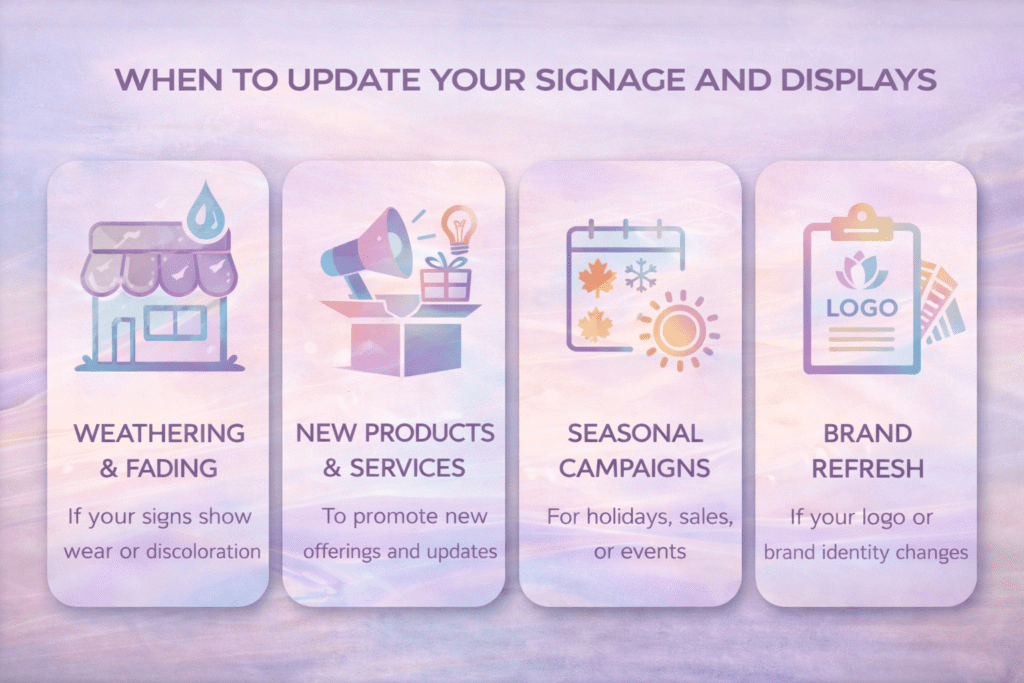
Brand evolution is another common trigger. This does not always mean a full rebrand. Small changes in logo usage, typography, colour balance, or tone accumulate over time. When signage no longer reflects current brand standards, it creates visual disconnect. Update signage and displays when they lag behind how the brand now presents itself elsewhere.
When to Refresh Your Signage and displays
Wear and tear should be assessed honestly. Fading colours, peeling edges, scratches, or warped materials signal neglect. Customers often equate signage condition with business quality. Even durable signage has a lifespan. Update signage and displays when deterioration becomes noticeable rather than waiting for failure.
Changes in environment often necessitate updates. Renovations, layout changes, new furniture, or altered lighting conditions can affect sign visibility and relevance. A sign that worked perfectly in one layout may become obscured or redundant in another. Update signage and displays when physical context changes.
Customer behaviour provides important cues. If customers frequently ask questions that signage should answer, the signage may be unclear, poorly positioned, or outdated. Repeated confusion is a signal. Update signage and displays when they no longer reduce friction effectively.
Growth or contraction also affects signage needs. Adding new services, expanding teams, or changing workflows often requires new directional or informational signs. Conversely, removing services without updating signage creates confusion. Update signage and displays to reflect operational reality, not past structure.
Regulatory and compliance changes must be monitored. Safety signs, accessibility markers, and compliance notices are subject to regulation. Outdated or missing compliance signage creates risk. Update signage and displays when regulations change or when standards are updated.
Seasonal relevance is another factor. Some signage is designed to be permanent, while other displays are campaign-based. Leaving seasonal signage up too long reduces credibility. Update signage and displays when promotions or campaigns end to maintain clarity and professionalism.
Technology changes can also trigger updates. QR codes, payment options, or digital integration evolve. Signs promoting outdated technology feel dated. Update signage and displays when customer interaction methods change.
Competitive context matters. As surrounding businesses update their spaces, outdated signage becomes more noticeable by contrast. While chasing trends is unnecessary, falling far behind visual norms can hurt perception. Update signage and displays when competitors raise the baseline of professionalism.
Repetition fatigue is often overlooked. Long-term customers may stop noticing signage that never changes. Strategic updates refresh attention without requiring full replacement. Small design adjustments or repositioning can restore impact. Update signage and displays when they no longer command attention.
Internal feedback is valuable. Staff interact with signage daily and often notice issues before management does. Difficulty explaining information that should be self-evident points to signage failure. Update signage and displays when internal users flag recurring problems.
Maintenance cycles provide natural review points. Scheduled maintenance, cleaning, or refurbishments are ideal times to audit signage. Integrating updates into existing cycles reduces disruption and cost. Update signage and displays proactively rather than reactively.
Cost efficiency improves with timely updates. Waiting too long often results in emergency replacements, rush fees, or larger overhauls. Incremental updates spread cost and maintain consistency. Update signage and displays before issues escalate.
Rebranding is not the only moment for change. Many businesses delay updates because they believe signage should only change during major brand shifts. This mindset leads to stagnation. Update signage and displays whenever they no longer serve their purpose effectively.
Data and measurement can guide decisions. Tracking customer flow, dwell time, or frequently asked questions reveals whether signage is performing. Signs that do not influence behaviour are candidates for revision. Update signage and displays based on evidence rather than assumption.
Multi-location businesses require regular audits. Signage consistency often erodes unevenly across sites. Scheduled reviews ensure alignment. Update signage and displays systematically rather than piecemeal.
Sustainability considerations also apply. Updating signage does not always mean discarding everything. Modular systems allow partial replacement. Updating only what is necessary reduces waste. Update signage and displays responsibly by designing for adaptability.
Planning ahead is essential. Updating signage under pressure leads to compromises. Early planning allows for better material choices, clearer messaging, and smoother rollout. Update signage and displays as part of strategic planning, not crisis management.
Working with experienced print and branding partners improves outcomes significantly. Strategic guidance helps assess what needs updating and what can remain. Collaboration with Kawaii Labs Corporate supports this process by aligning signage updates with brand strategy, operational needs, and long-term value.
Ultimately, signage should evolve alongside the business. Static signage in a changing environment becomes invisible or misleading. Regular evaluation keeps communication clear and credible.
Update signage and displays when they stop informing, guiding, or reinforcing trust. Waiting for failure costs more than planned improvement.
Effective signage is not defined by how long it lasts physically, but by how long it remains relevant. Updating at the right time ensures your displays continue to work quietly and reliably, supporting the brand every day they are in place.


