Photo by Kawaii Labs
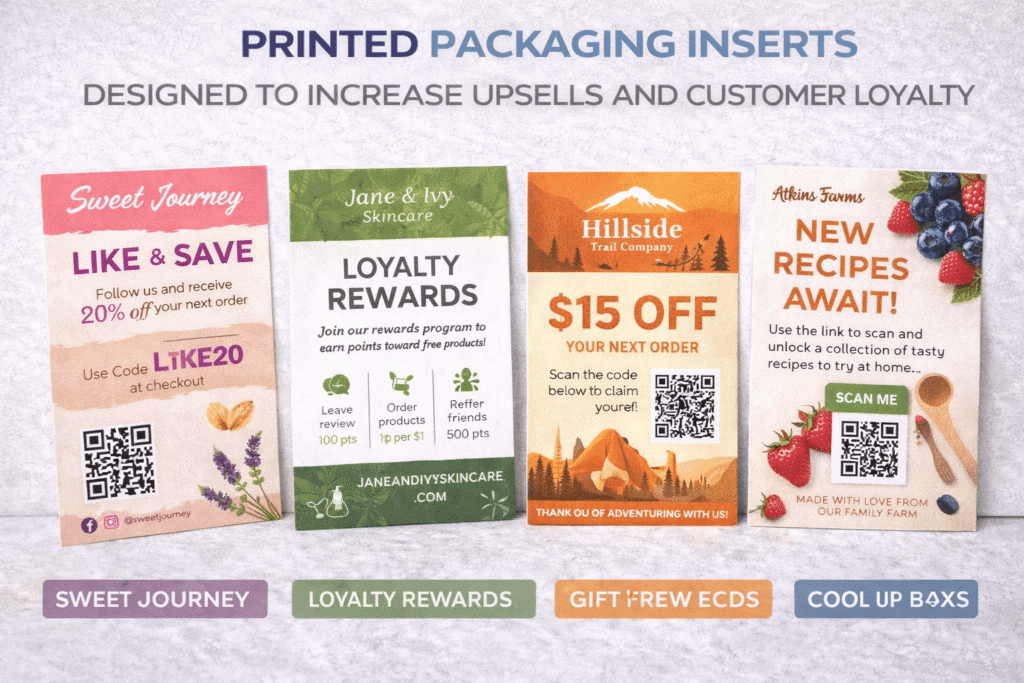
Print inserts are often underestimated because they are small, inexpensive, and easy to add last-minute. In reality, print inserts are one of the most effective tools for influencing post-purchase behaviour. They reach customers at a moment of attention, trust, and emotional engagement. When designed intentionally, print inserts can drive upsells, repeat purchases, and long-term loyalty without aggressive marketing.
The power of print inserts lies in timing. Unlike emails or ads that compete for attention, inserts are encountered during unboxing. At that moment, the customer has already committed. The purchase decision is complete, and resistance is low. This makes inserts uniquely positioned to extend the relationship rather than start it.
Effective print inserts are not promotional flyers. They are contextual brand touchpoints. Their role is to guide the next action naturally, not to push discounts aggressively. Inserts that feel helpful and relevant outperform those that feel sales-driven.
Clarity is the first requirement. A printed insert should have one primary purpose. That purpose might be encouraging a repeat purchase, introducing a complementary product, explaining how to get more value from the current product, or reinforcing brand values. Trying to achieve all of these at once results in diluted impact.
Upsell-focused print inserts work best when they are specific. Instead of listing a full product catalogue, they highlight one or two relevant add-ons. The key is alignment. The suggested product should clearly relate to what the customer just bought. Relevance builds trust and increases conversion.
Why Print Inserts Matter in Packaging
Visual restraint improves effectiveness. Inserts are read quickly. Clean layouts, strong hierarchy, and minimal copy outperform dense designs. A single image, short headline, and clear call-to-action are usually enough. Overdesigned inserts feel like advertising and are more likely to be ignored.
Print inserts that drive loyalty focus less on selling and more on connection. Thank-you cards, care guides, or usage tips demonstrate that the brand values the customer beyond the transaction. This emotional reinforcement increases the likelihood of return purchases even when no immediate incentive is offered.
Educational inserts are particularly effective. Showing customers how to use a product properly, how to extend its lifespan, or how to combine it with other items increases perceived value. When customers feel informed, they feel supported. Support builds loyalty.
Discounts can work, but they should be used strategically. A small incentive tied to a specific action, such as a second purchase or a referral, performs better than generic percentage-off messaging. The discount should feel like a reward, not a bribe. Print inserts should reinforce brand confidence, not train customers to wait for promotions.
Personalisation at scale improves results. While individual names are not always practical, contextual personalisation is highly effective. Inserts can reference the product category, campaign, season, or customer segment. This keeps messaging relevant without complicating production.
Physical quality matters more than many brands realise. Cheap paper, poor printing, or flimsy inserts undermine credibility. Because inserts are handled closely, quality is noticed immediately. A well-printed insert signals care and professionalism, reinforcing trust built by the product itself.
Size and format should be intentional. Oversized inserts feel intrusive. Tiny inserts get lost. Standard postcard or small card formats work well because they are easy to handle and easy to keep. Inserts that can be pinned, stored, or reused extend brand presence beyond unboxing.
Integration with broader brand systems strengthens impact. Inserts should match the brand’s visual language, tone, and messaging used elsewhere. Consistency builds recognition. When print inserts feel disconnected from the rest of the brand, they lose credibility.
Timing within the unboxing sequence also matters. Inserts placed on top are seen first and feel intentional. Inserts buried at the bottom feel accidental. Placement should be deliberate and consistent across orders. This predictability improves perception and operational efficiency.
Printed packaging inserts are also valuable for gathering feedback. A simple prompt inviting customers to review, share, or respond creates a two-way interaction. When feedback requests feel personal and low-pressure, response rates improve. This information supports both product improvement and relationship building.
Scalability is one of the strongest advantages of printed inserts. Once designed, they are easy to reproduce, update, and distribute. This makes them suitable for ongoing programmes such as onboarding, seasonal campaigns, or loyalty initiatives. Print inserts can evolve without changing core packaging.
Cost efficiency should be evaluated over time. Printed packaging inserts have a low unit cost, but their impact compounds through repeat purchases and increased lifetime value. Few marketing tools offer comparable ROI with such minimal spend.
Sustainability should be considered. Inserts should be purposeful. Unnecessary paper undermines credibility. Compact formats, recyclable materials, and meaningful content ensure that inserts feel intentional rather than wasteful. Customers are more receptive when they understand the value of what they receive.
Testing is essential. Brands should trial different messages, formats, and placements to understand what resonates. Even small changes in wording or design can significantly affect performance. Testing allows optimisation without major investment.
Operational alignment is critical. Inserts should fit seamlessly into packing workflows. Complex folding or multiple variations increase error risk. Simplicity supports consistency and scale.
Working with experienced print and branding partners improves outcomes significantly. Strategic guidance helps brands align insert content, design, and production with real-world behaviour and operational constraints. Collaboration with Kawaii Labs Corporate supports this approach by ensuring that printed packaging inserts are designed to perform, not just look good.
Ultimately, printed packaging inserts succeed because they respect the moment. They do not interrupt. They accompany. When brands use inserts to guide, support, and reward customers, they extend the value of every order.
In competitive markets, loyalty is built through accumulated details. Printed packaging inserts are one of those details. When executed with intention, they quietly increase upsells, strengthen relationships, and turn one-time buyers into returning customers.