
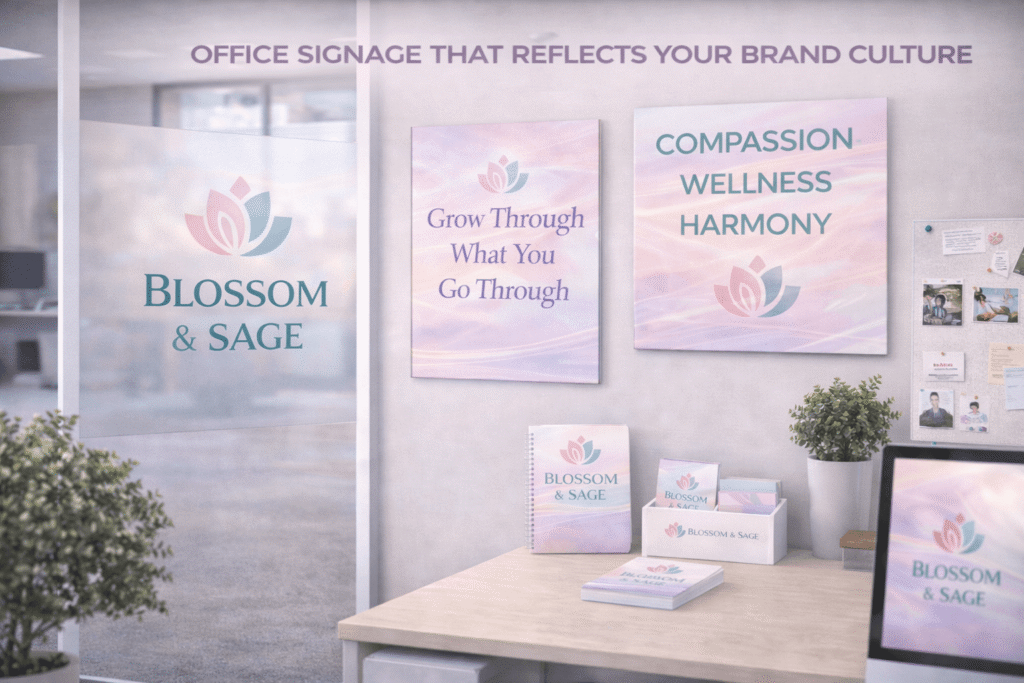
Photo by Kawaii Labs
Office signage does more than label rooms or point people in the right direction. It quietly communicates how a company thinks, behaves, and values its people. Office brand culture signage is one of the most underused tools in internal branding because it sits at the intersection of function and identity. When done well, it reinforces culture without slogans or speeches.
Enhancing Your Office Brand Culture Signage
Culture is not what is written in a handbook. It is what people experience daily. Signage contributes to that experience by shaping how spaces feel and how information is delivered. Tone, clarity, restraint, and consistency all send signals. Office brand culture signage should align with how the organisation actually operates, not how it wants to be perceived externally.
The first step is defining what culture looks like in practice. A collaborative culture values openness and clarity. A performance-driven culture values focus and accountability. A people-first culture values accessibility and respect. Signage should support these behaviours rather than contradict them. Office brand culture signage must be rooted in reality.
Language choice is critical. Formal, rigid language signals hierarchy and control. Conversational language signals approachability and openness. Neither is inherently better, but mismatch creates tension. Office brand culture signage should sound like the organisation speaks internally, not like marketing copy.
Wayfinding and functional signage are culture signals too. Clear, intuitive navigation shows respect for people’s time. Confusing or inconsistent signage signals disorganisation. Office brand culture signage should make spaces easier to use, not harder.
Design restraint communicates confidence. Overdesigned signs feel performative. Underdesigned signs feel neglected. Balanced design signals intention. Typography, spacing, and hierarchy should prioritise readability. Office brand culture signage works best when it feels considered but not decorative.
Material choice also communicates values. Durable, well-produced signs signal investment and care. Flimsy or temporary-looking signage suggests short-term thinking. Office brand culture signage should match the organisation’s attitude toward quality and longevity.
Consistency across spaces matters. When signage varies wildly between departments or floors, culture fragments. A consistent system reinforces shared identity. This does not mean removing individuality, but it does mean establishing a clear visual framework. Office brand culture signage should unify without flattening.
Values statements are often mishandled. Generic phrases printed large quickly fade into background noise. If values are displayed, they should be specific, relevant, and supported by behaviour. Office brand culture signage should focus on how values show up, not just what they are called.
Meeting rooms offer strong opportunities for cultural reinforcement. Naming conventions, tone, and supporting signage all contribute to how meetings feel. Formal names signal structure. Creative names signal informality. Office brand culture signage in these spaces should align with how meetings are expected to run.
Internal posters should be used selectively. Overuse turns messages into wallpaper. When posters are used, they should support active priorities rather than abstract ideals. Office brand culture signage is most effective when it reinforces what matters now.
Accessibility is a cultural signal. Clear signage, appropriate height placement, readable fonts, and good contrast demonstrate inclusivity. Office brand culture signage should support all users without drawing attention to accommodation as an afterthought.
Tone consistency across compliance and culture signage matters. Safety signs must be clear and authoritative, but they should still align visually with the brand. Disconnected styles create cognitive friction. Office brand culture signage should maintain coherence even when tone shifts.
Change communication benefits from signage. During transitions, clear visual cues reduce uncertainty. Temporary signs should still follow brand standards. Sloppy temporary signage signals chaos. Office brand culture signage should remain disciplined even during change.
Humour and informality should be used carefully. In some cultures, light humour supports engagement. In others, it undermines seriousness. Office brand culture signage should reflect what is genuinely acceptable internally, not what seems trendy.
Private and shared spaces should be treated differently. Shared areas benefit from neutral, inclusive signage. Team-specific areas can express more personality. Office brand culture signage should recognise these boundaries clearly.
Leadership presence influences impact. When leaders reference or respect signage, it gains credibility. Signage ignored by leadership becomes decoration. Office brand culture signage works best when it is integrated into daily behaviour.
Maintenance matters more than design perfection. Outdated, damaged, or crooked signs signal neglect. Regular review and upkeep reinforce that culture is actively managed. Office brand culture signage should evolve as the organisation evolves.
Measurement is subtle but possible. Reduced confusion, smoother onboarding, and fewer repeated questions indicate effective signage. Culture-aligned signage supports operations quietly. Office brand culture signage should be evaluated on behaviour, not aesthetics alone.
Hybrid work environments require consistency across physical and digital spaces. Messaging seen in-office should align with internal digital communication. Office brand culture signage should not contradict what remote teams experience.
Sustainability choices also reflect culture. Durable materials, modular systems, and thoughtful updates signal responsibility. Office brand culture signage should align with stated environmental values where applicable.
Working with experienced print and branding partners improves outcomes significantly. Strategic guidance helps translate abstract cultural values into practical, readable, and durable signage systems. Collaboration with Kawaii Labs Corporate supports this process by aligning internal signage with brand strategy, operational needs, and long-term consistency.
Ultimately, office signage should feel natural in its environment. It should not announce culture. It should demonstrate it.
When signage reflects how people actually work and interact, it reinforces trust. Employees feel oriented rather than instructed. Visitors feel clarity rather than confusion. Office brand culture signage succeeds when it supports behaviour quietly and consistently.
Culture is built through repetition. Signage is one of the few tools that repeats without effort. When used intentionally, it becomes part of how culture is experienced every day.


