
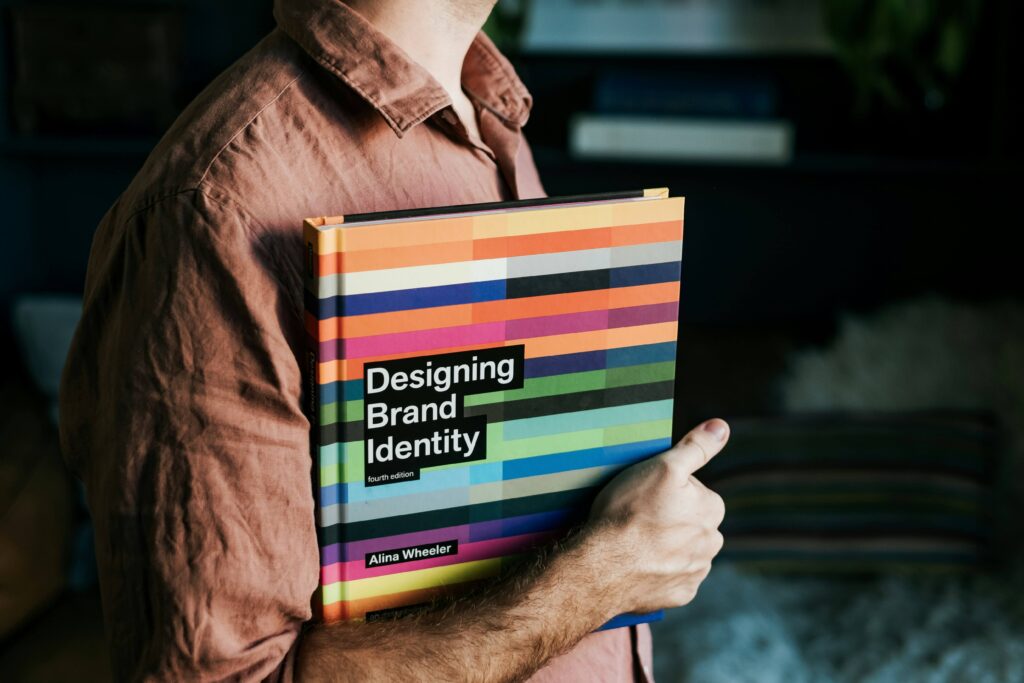
Photo by Hank Paul
Startup branding often feels overwhelming because everything appears important at once. Logos, websites, social media, packaging, pitch decks, and marketing materials all compete for attention. The mistake most startups make is trying to do everything simultaneously without first establishing clarity. Effective startup branding begins with structure, not surface.
Branding is not decoration. It is the system that explains what the business is, who it is for, and why it matters. For startups, branding plays an even larger role because there is no existing reputation to rely on. Every touchpoint contributes to perception. This makes early decisions disproportionately influential.
The first step in startup branding is defining purpose. This goes beyond a mission statement. Purpose clarifies why the business exists and what problem it solves. Without this clarity, branding becomes reactive. Decisions feel arbitrary, and consistency is difficult to maintain.
Audience definition follows closely. Startups often try to appeal broadly to maximise opportunity, but this weakens relevance. Branding works best when it speaks clearly to a specific audience. Understanding motivations, constraints, and expectations allows the brand to communicate with precision. Startup branding improves when focus replaces generalisation.
Positioning establishes how the startup fits into the market. This is not about claiming to be the best. It is about being distinct. Positioning answers how the brand should be perceived relative to alternatives. Clear positioning simplifies branding decisions by providing a reference point for tone, visuals, and messaging.
Value proposition translates positioning into benefit. It explains why someone should choose this startup. Features alone are not enough. Customers care about outcomes. Startup branding should express value in a way that is easy to understand and repeat.
Brand personality defines how the startup communicates. Is it direct or considered. Formal or approachable. Innovative or reassuring. Personality should align with audience expectations and category norms. Inconsistent personality erodes trust quickly. Startup branding relies on behavioural consistency as much as visual consistency.
Naming often receives too much attention early, but it still matters. A startup name should be usable, distinct, and appropriate for growth. It does not need to explain everything. It needs to avoid friction. Startup branding benefits from names that are easy to say, spell, and remember.
Visual identity comes next, but only after strategic foundations exist. Logos, colours, and typography should express positioning and personality, not personal taste. Visual systems should be flexible enough to scale across channels and formats. Startup branding fails when visuals are trendy but impractical.
Colour choices influence perception immediately. Startups should choose colours that reflect positioning and work in both digital and print environments. Colour systems should include primary and supporting tones to allow variation without inconsistency.
Typography carries tone and usability. Fonts must be legible, versatile, and appropriate for different applications. One primary typeface and one supporting typeface are usually sufficient. Overcomplication increases inconsistency. Startup branding benefits from restraint.
Logo design should prioritise function. It must work at small sizes, in monochrome, and across materials. Complex logos limit usability. Startup branding improves when logos are simple, recognisable, and adaptable.
Messaging frameworks are often overlooked. Startups create content quickly, which leads to inconsistency without guidance. Defining key messages, proof points, and language rules supports coherence across marketing, sales, and internal communication.
Digital presence is often the first brand interaction. Websites, landing pages, and social profiles must align with the brand system. Visual and verbal inconsistency between channels creates doubt. Startup branding should feel cohesive, even when resources are limited.
Physical touchpoints matter sooner than many startups expect. Business cards, packaging, signage, and printed materials carry weight because they are tangible. Poor-quality print undermines credibility. Startup branding should consider physical expression early, not as an afterthought.
Internal alignment is critical. Founders and teams must understand the brand to represent it consistently. Branding is not owned by design alone. Startup branding succeeds when everyone understands how to speak and act on behalf of the brand.
Speed creates risk. Startups move fast, but branding still requires discipline. Rushed decisions accumulate into inconsistency. Startup branding improves when systems are created early to support rapid execution later.
Feedback should be observed carefully. Early responses reveal whether the brand is clear and credible. Defensive reactions block learning. Startup branding evolves through listening and adjustment, not stubbornness.
Turning Startups Into a Scalable System
The goal of startup branding is not perfection. It is clarity and repeatability.
Start by documenting the essentials. Purpose, positioning, audience, personality, and value proposition should be written clearly. These elements guide all branding decisions.
Next, define non-negotiables. Logo usage, colour values, typography rules, and tone guidelines protect consistency. Even lightweight documentation reduces drift significantly.
Create templates. Email signatures, presentations, proposals, and social posts should follow shared patterns. Templates reduce friction and maintain consistency as the team grows.
Prioritise high-impact touchpoints. Website, sales materials, packaging, and onboarding assets often shape first impressions. Startup branding should focus effort where it matters most.
Plan for change without chaos. Brands evolve, but constant reinvention weakens recognition. Startup branding should be refined intentionally rather than reset repeatedly.
Measure success through clarity and trust. If customers understand what the startup does and feel confident engaging, branding is working.
Working with experienced branding and print partners improves outcomes significantly. Translating strategy into real-world execution requires production insight as well as design thinking. Collaboration with Kawaii Labs Corporate supports startups by aligning early brand decisions with scalable print, packaging, and physical brand systems.
Ultimately, startup branding is about making the business easier to understand, easier to trust, and easier to choose.
Where to begin is not with visuals. It is with clarity.
When foundations are solid, branding decisions become faster, cheaper, and more effective. For startups, that clarity is not a luxury. It is a competitive advantage.