
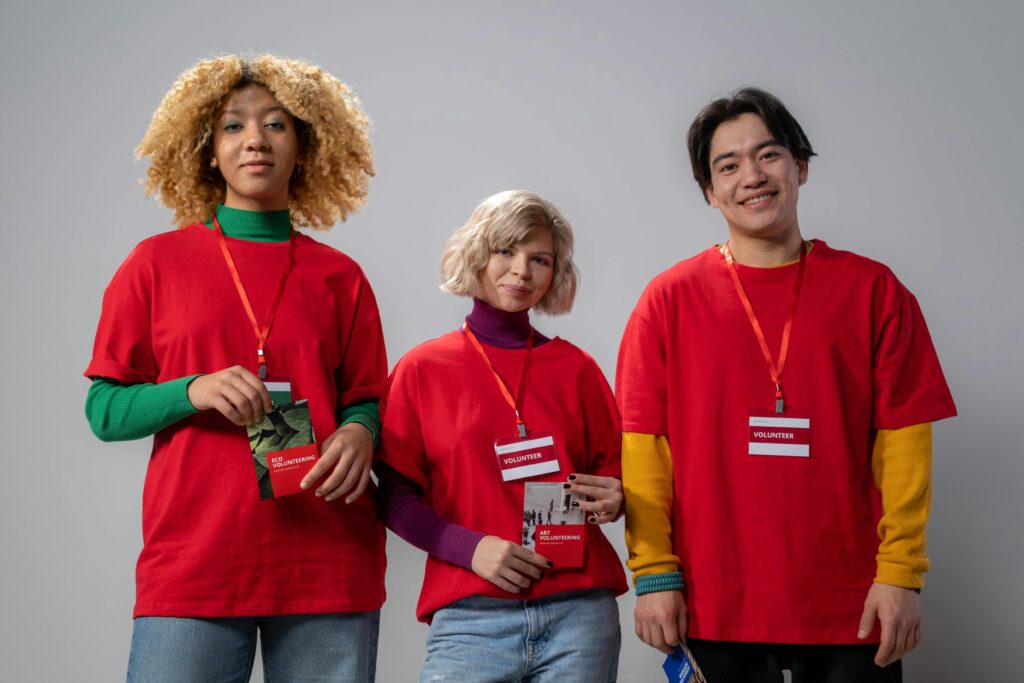
Photo by cottonbro studio
Branded wearables at trade shows are often underestimated. They are sometimes treated as optional extras or simple uniforms, rather than strategic brand tools. In reality, wearables are among the most effective ways to increase visibility, recognition, and credibility in crowded event environments.
Trade shows are designed to overwhelm. Hundreds of brands compete for attention in a limited space, over a short period of time. In this context, branded wearables act as moving signage. They extend brand presence beyond the booth and carry messaging into aisles, lounges, entrances, and networking areas.
The most immediate benefit of branded wearables at trade shows is visibility. Apparel, lanyards, caps, or badges create repeated visual exposure without requiring direct interaction. Attendees may not remember every booth they pass, but they remember colours, logos, and people. Wearables reinforce those visual cues continuously.
Recognition follows visibility. When a team wears consistent branded items, the brand becomes easier to identify. Attendees can quickly spot staff members when returning to a booth or asking questions. This reduces friction and improves approachability. Branded wearables at trade shows support navigation as much as promotion.
Professionalism is another key factor. Coordinated wearables signal organisation and preparedness. A team dressed consistently appears more credible than one dressed casually or inconsistently. This perception influences trust, especially in industries where reliability matters. Branded wearables at trade shows quietly communicate seriousness without needing explanation.
Wearables also support internal alignment. When staff wear branded items, they feel part of a team rather than individuals working independently. This improves confidence and cohesion. Confident teams engage better, which directly affects outcomes. Branded wearables at trade shows influence behaviour as much as appearance.
From a branding perspective, repetition builds recall. Attendees may encounter the same wearable multiple times throughout the day. Each exposure strengthens familiarity. This repeated, low-effort exposure improves brand recall far more effectively than a single interaction. Branded wearables at trade shows work through frequency rather than force.
Unlike many printed giveaways, wearables can extend impact beyond the event. High-quality items are often worn again. T-shirts, caps, or lanyards used after the event continue generating impressions. Branded wearables at trade shows therefore offer long-term value rather than one-day exposure.
Subtle branding improves adoption. Overly large logos or aggressive messaging reduce wearability. Smaller, well-placed branding increases the likelihood that wearables are worn publicly. Branded wearables at trade shows perform best when they feel considered rather than promotional.
Comfort and quality matter. Poorly made apparel is worn reluctantly or not at all. This undermines visibility and morale. Branded wearables at trade shows should be selected with comfort, fit, and durability in mind. Quality directly affects how often items are worn.
Colour choice plays a strategic role. High-contrast colours improve visibility in busy halls. Brand colours should be used confidently, but readability must remain a priority. Branded wearables at trade shows should stand out without clashing with the environment.
Wearables also support storytelling. A slogan, icon, or subtle design element can spark conversation. When attendees ask about the wearable, it opens a natural entry point for engagement. Branded wearables at trade shows can initiate interaction without forcing it.
Consistency across touchpoints strengthens impact. Wearables should align with booth design, signage, and printed materials. When everything feels connected, the brand appears more established. Branded wearables at trade shows work best as part of a broader system rather than in isolation.
Sustainability considerations are increasingly important. Reusable, durable wearables reflect responsibility and reduce waste. Disposable or poor-quality items damage perception. Branded wearables at trade shows should align with brand values, not contradict them.
Cost efficiency improves when wearables are planned strategically. While the upfront cost may be higher than simple giveaways, the extended lifespan and repeated exposure often deliver better return. Branded wearables at trade shows reward long-term thinking.
Using Branded Wearables Effectively at Trade Shows
To maximise impact, branded wearables should be planned intentionally.
Start by defining purpose. Decide whether wearables are primarily for staff identification, attendee giveaways, or both. Each use case requires different design and quality levels.
Choose items that suit the environment. Indoor events may favour lightweight apparel. Outdoor events may require layers or accessories.
Prioritise comfort and fit. Offer size ranges and breathable materials. Comfortable wearables are worn more often.
Design branding for longevity. Subtle placement increases reuse beyond the event.
Align colours with booth design. Visual consistency improves recognition.
Limit messaging. Wearables are seen at a distance. Simplicity improves clarity.
Plan distribution carefully. Not every attendee needs a wearable. Tiered strategies protect budget and increase perceived value.
Test samples before committing. Fit, colour, and comfort should be validated physically.
Consider post-event use. Choose items people will actually wear again.
Work with experienced partners who understand apparel production and event dynamics. Collaboration with Kawaii Labs Corporate supports branded wearables at trade shows by aligning design, material choice, and production quality with brand strategy and real-world use.
Ultimately, branded wearables matter at trade shows because they move with the audience.
They extend brand presence beyond the booth.
They build recognition through repetition.
They support professionalism, confidence, and engagement simultaneously.
In environments where attention is fragmented and competition is intense, branded wearables at trade shows do not shout louder. They show up more often.
And that consistency is what makes them one of the most effective trade show tools available.