
Photo by Pexels
Sublimation is widely used in textile printing because it delivers vibrant colour, zero hand-feel, and long-term durability. However, successful results are not automatic. Sublimating textiles requires technical discipline, correct material choices, and process control. When shortcuts are taken, the same method that produces premium results can quickly damage brand perception.
Understanding the do’s and don’ts of sublimating textiles helps brands, designers, and print buyers avoid common mistakes that lead to faded prints, inconsistent colour, or unusable garments. Sublimation is unforgiving. Precision matters at every stage.
Why Fabric Choice Matters When Sublimating Textiles
One of the most important do’s is choosing the right fabric. Sublimation works best on polyester or polyester-rich blends. The dye bonds with synthetic fibres, becoming part of the fabric itself. High polyester content ensures colour vibrancy and durability. Attempting to sublimate natural fibres like cotton without specialised coatings leads to dull colours and rapid fading. Fabric composition should always be confirmed before production begins.
Another critical do is testing fabric batches before full runs. Even within polyester textiles, coatings, weaves, and finishes vary. These differences affect colour absorption and final appearance. Sampling allows adjustments to colour profiles and heat settings before committing to volume. Brands that skip testing often discover problems only after production, when correction is costly.
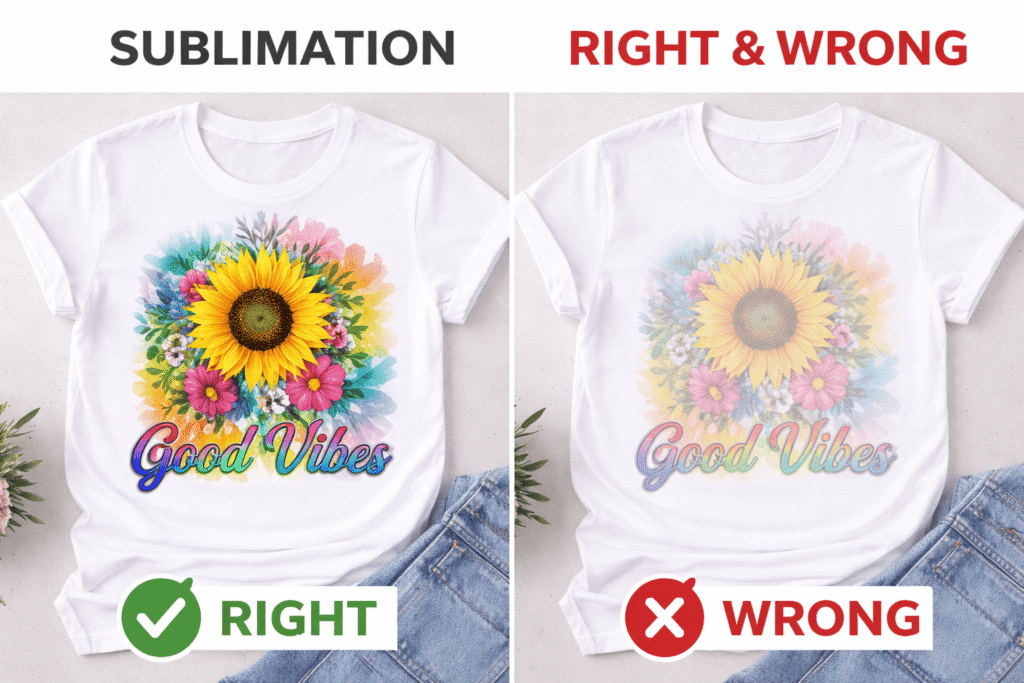
Temperature and time control are non-negotiable. One of the most common mistakes when sublimating textiles is relying on generic settings. Each fabric responds differently to heat and dwell time. Too little heat results in muted colours. Too much heat causes scorching, fabric distortion, or colour shift. Proper calibration ensures consistent results and protects fabric integrity.
Using high-quality sublimation inks and transfer paper is another essential do. Low-grade materials may appear cost-effective initially, but they compromise colour stability and transfer efficiency. Inconsistent ink laydown or poor release paper results in patchy or uneven prints. Over time, these issues reflect poorly on the brand, regardless of design quality.
File preparation is equally important. Designs intended for sublimating textiles should be created at the correct resolution and colour space. RGB files typically produce better results than CMYK because sublimation printers interpret colour differently. Designers should also account for colour shift during transfer. What appears on screen is not what appears on fabric without proper profiling.
One major don’t is overloading designs with fine text or intricate details without considering fabric texture. Textiles are not smooth substrates. Knits, weaves, and stretch all affect legibility. Extremely thin lines or small text can distort or disappear once transferred. Designs should be optimised for fabric behaviour rather than flat presentation.
Another don’t is ignoring garment construction. Sublimating textiles requires awareness of seams, panels, and stretch zones. All-over prints must be designed with pattern placement in mind. Ignoring cut lines leads to misaligned graphics and broken visuals once garments are assembled. Design should always account for how the textile will be cut and sewn.
Avoid sublimating on dark fabrics unless the design is intended for muted results. Sublimation dyes are transparent. They do not contain white ink. On dark textiles, colours lose contrast and clarity. Attempting to force bright designs onto dark fabrics leads to disappointing outcomes. If strong contrast is required, alternative print methods should be considered.
Another common don’t is rushing production. Sublimating textiles requires controlled workflow and cooling time. Removing transfers too quickly or stacking hot garments can cause ghosting or colour migration. Allowing proper cooling stabilises the print and prevents reactivation of the dye.
Moisture control is another critical factor often overlooked. Fabrics must be completely dry before sublimation. Residual moisture causes uneven transfers and colour bleed. Pre-pressing garments removes moisture and smooths the surface, improving transfer accuracy. Skipping this step introduces avoidable defects.
Brands should also avoid treating sublimation as a one-size-fits-all solution. While sublimating textiles works exceptionally well for sportswear, activewear, and performance garments, it may not suit every application. Fabric type, use case, and brand positioning should guide method selection. Strategic decision-making matters as much as technical execution.
Quality control should never be skipped. Finished garments should be inspected for colour consistency, alignment, and fabric integrity. Sublimation defects are often permanent. Catching issues early prevents distribution of flawed products that damage credibility.
Working with experienced production partners reduces risk significantly. Sublimation success depends on the alignment of design, materials, and process. Partners such as Kawaii Labs Corporate provide technical insight that helps brands make informed decisions, especially when scaling production or launching new textile ranges.
Planning also plays a vital role. Sublimating textiles is most effective when integrated into a broader brand system rather than treated as a last-minute solution. Early planning allows for sampling, refinement, and alignment with brand standards.
Ultimately, the do’s and don’ts of sublimating textiles revolve around respect for the process. Sublimation rewards preparation, testing, and precision. When executed correctly, it produces durable, breathable, and visually consistent results that support long-term brand value. When rushed or misapplied, it exposes flaws quickly.
Brands that treat sublimation as a technical craft rather than a shortcut consistently achieve better outcomes. In textile printing, discipline delivers durability.