Photo by Kawaii Labs
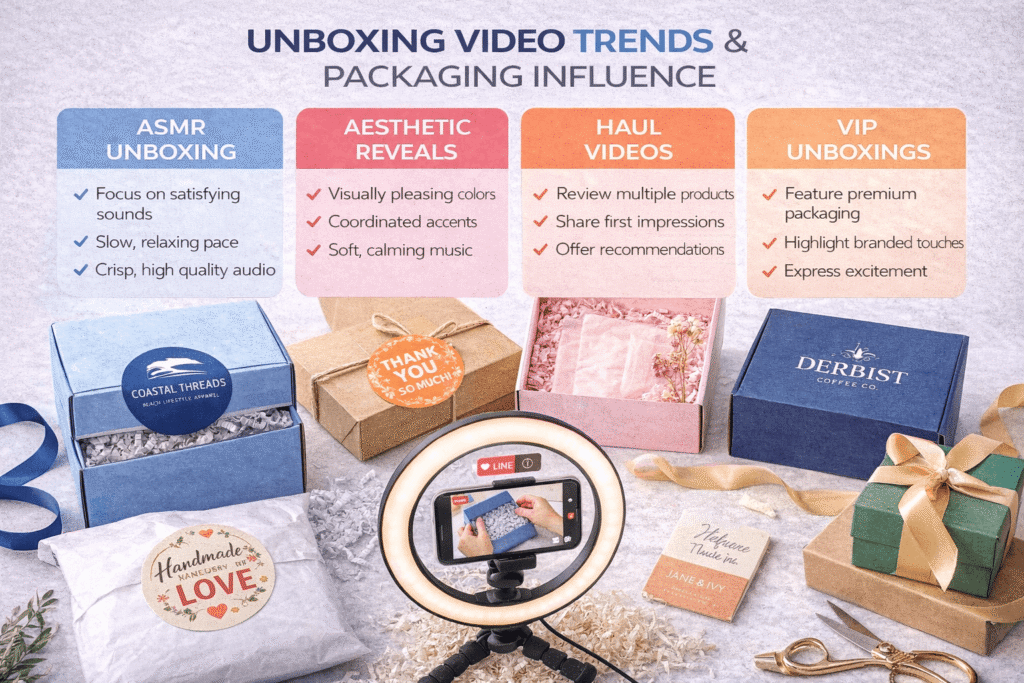
Unboxing videos have shifted from novelty content to a measurable driver of brand visibility and purchasing behaviour. What began as casual product reveals has evolved into a recognised content format across platforms such as YouTube, TikTok, and Instagram. In this environment, packaging is no longer experienced only by the buyer. It is performed for an audience. Unboxing video packaging trends reflect this shift, placing new demands on structure, print, and presentation.
Packaging designed for unboxing videos must function in two contexts at once. It must satisfy the recipient physically while translating clearly on camera. This dual requirement has changed how brands think about materials, sequencing, and visual hierarchy. Packaging that looks acceptable in person may fail on screen. Packaging that performs well on screen often drives stronger recall and shareability.
The first influence of unboxing video trends is pacing. Successful unboxing videos follow a clear visual rhythm. Slow reveals, clean transitions, and intentional sequencing hold attention. Packaging that supports this rhythm performs better on camera. Loose items, cluttered interiors, or unclear opening points disrupt flow and reduce watch time. Structure is no longer just functional. It is narrative.
Exterior packaging sets the opening frame. On camera, first impressions are compressed into seconds. Clean branding, legible marks, and consistent colour fields read more clearly than complex designs. Overly detailed graphics often blur or distract when filmed. Unboxing video packaging trends favour clarity over decoration at this stage.
Interior presentation carries the main visual weight. Once the box is opened, the camera lingers. This is where brands gain or lose impact. Layering elements such as tissue, sleeves, or inserts creates visual depth without requiring expensive materials. These layers also slow the reveal naturally, which increases engagement. Thoughtful layering has become a defining feature of packaging designed for unboxing content.
Print elements play a critical role. A simple printed card or insert often becomes the focal point of the video. Messaging should be short, legible, and camera-friendly. Dense text is rarely read aloud or fully captured. High-contrast typography and generous spacing perform better on screen. Unboxing video packaging trends prioritise readability at arm’s length.
Sound has also become part of the experience. The noise of tearing tissue, lifting lids, or removing protective layers contributes to perceived quality. Packaging that creases awkwardly or tears unpredictably produces distracting audio. Materials should open cleanly and predictably. These sensory details influence how premium the product feels to viewers.
Colour psychology behaves differently on camera. Certain colours appear muted or distorted under artificial lighting. Neutral palettes tend to read more consistently across environments. Brands often introduce accent colour inside the packaging to create a moment of contrast. This interior reveal photographs and films better than full-colour exteriors while maintaining control over cost and consistency.
Logos and branding must be placed with camera angles in mind. Logos positioned on box lids, inner flaps, or inserts are more likely to appear naturally in frame. Side-panel branding may be missed entirely. Unboxing video packaging trends show a move toward fewer logos placed more deliberately rather than many logos scattered across surfaces.
Finish selection also affects on-camera performance. Gloss finishes reflect light unpredictably, creating glare and hotspots. Matte finishes diffuse light and reduce reflection, making them more reliable for filming. While gloss can work in controlled lighting, matte surfaces are generally safer for content created in home environments.
Scale and proportion matter. Packaging that is too large feels inefficient and looks wasteful on camera. Packaging that is too small limits reveal and reduces perceived value. Right-sized packaging creates a sense of balance that reads well visually and aligns with sustainability expectations. Viewers increasingly notice excess.
Brand storytelling has adapted to this format. Instead of long brand explanations, packaging now delivers cues that creators can narrate themselves. Minimal prompts, such as a short brand statement or product descriptor, give creators something to reference without scripting the moment. This supports authenticity, which audiences value.
Why Unboxing Videos Matter in Modern Marketing
Unboxing video packaging trends also influence repeatability. Brands that maintain consistent packaging systems benefit from recognisable visuals across multiple videos. Viewers begin to identify the brand before the product is revealed. This familiarity strengthens recall and reduces reliance on creator explanation.
Influencer and customer-generated content have different needs, but packaging can serve both. Influencers often control lighting and framing. Customers do not. Packaging must therefore perform under imperfect conditions. Simple structures, predictable opening points, and forgiving materials increase the likelihood of positive representation across all content types.
From a commercial perspective, the influence is measurable. Products featured in unboxing videos often see increased traffic, longer session times, and higher conversion rates. Packaging becomes part of the marketing funnel. Unboxing video packaging trends reflect the reality that packaging now contributes to acquisition, not just fulfilment.
However, packaging should not be designed purely for spectacle. Overly theatrical packaging often feels performative and wasteful, which audiences increasingly criticise. The strongest unboxing experiences balance visual interest with restraint. Purposeful design outperforms gimmicks.
Operational feasibility remains essential. Packaging that looks good on camera but slows packing or increases error rates creates internal strain. Sustainable unboxing strategies prioritise repeatable systems that scale. This includes standardised box sizes, modular inserts, and interchangeable print elements.
Sustainability expectations are amplified by video. Excess materials are visible and often commented on. Viewers judge brands based on perceived waste. Unboxing video packaging trends show a clear move toward minimalism, recyclable materials, and reusable components. These choices influence brand sentiment publicly, not just privately.
Testing for camera performance is becoming standard practice. Brands increasingly film internal unboxings during development. This reveals issues with glare, legibility, and sequencing before launch. Testing reduces risk and improves consistency across real-world content.
Working with experienced print and packaging partners helps brands navigate these demands. Strategic guidance ensures that packaging performs visually, operationally, and sustainably. Collaboration with Kawaii Labs Corporate supports this by aligning packaging systems with both production realities and content-driven brand visibility.
Ultimately, unboxing videos have changed the role of packaging. It is no longer a passive container. It is a stage. Every fold, layer, and print choice contributes to how the brand is perceived by both the recipient and a wider audience.
Unboxing video packaging trends show that brands who design with intention, restraint, and clarity gain visibility without shouting. Packaging that performs well on camera while remaining practical off camera becomes a quiet multiplier of brand reach.
In a landscape where customers broadcast experiences instantly, packaging influence extends far beyond delivery. Brands that understand this design packaging that tells the right story, at the right pace, to the right audience.