
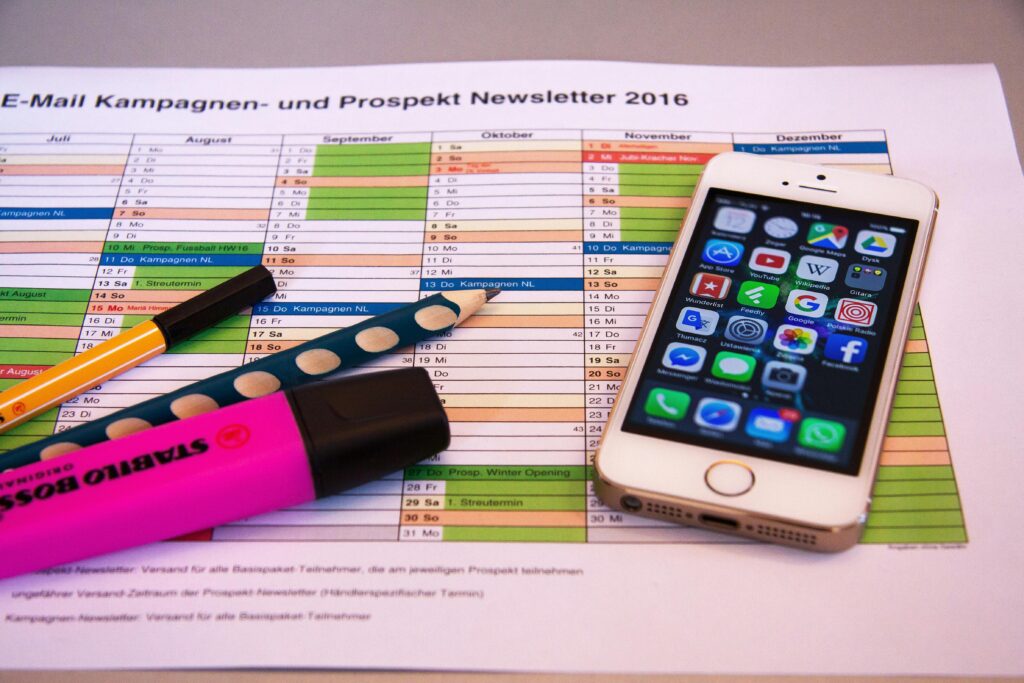
Photo by Pixabay
Why a Print Calendar Is a Strategic Asset
Many businesses treat printing as reactive. Materials are ordered when something comes up: an event, a promotion, a last-minute need. This reactive approach leads to rushed decisions, higher costs, inconsistent branding, and missed opportunities.
A print calendar changes that dynamic. It turns printing into a planned, strategic activity that supports marketing, operations, and brand consistency throughout the year. Instead of scrambling, teams can anticipate needs, align print with campaigns, and spread costs more evenly.
A well-built print calendar improves efficiency. It reduces last-minute rush fees, avoids duplicated work, and ensures materials are ready when needed. It also allows for better creative planning, resulting in stronger, more cohesive output.
At https://corporate.kawaiilabs.com, print calendars are used to align branding, marketing, and production into a single, manageable system rather than disconnected tasks.
Step One: Start With Business and Marketing Goals
The foundation of an effective print calendar is clarity on goals. Printing should support business objectives, not exist independently.
Begin by reviewing annual business priorities. These may include growth targets, new product launches, seasonal peaks, events, or brand initiatives. Marketing goals should also be mapped, including campaigns, promotions, and awareness efforts.
Each goal likely requires print support. For example:
- Product launches may need packaging, inserts, and point-of-sale materials
- Events require signage, banners, uniforms, and collateral
- Sales campaigns may need flyers, brochures, or direct mail
By anchoring the print calendar to real goals, printing becomes purposeful rather than habitual.
Step Two: Map Key Dates and Milestones
Once goals are defined, map out key dates across the year. These include both fixed and flexible milestones.
Fixed dates may include:
- Trade shows and conferences
- Seasonal holidays
- Financial year milestones
- Planned launches
Flexible milestones may include:
- Campaign windows
- Internal initiatives
- Sales pushes
Plot these dates on a yearly timeline. This visual overview reveals where print demand will spike and where quieter periods exist. It also helps identify overlapping needs that can be bundled or streamlined.
Timing matters. Print often needs lead time for design, approvals, production, and delivery. Working backwards from each date ensures deadlines are realistic.
Step Three: Identify Required Print Materials
For each milestone or campaign, list the print materials required. Be specific. Vague planning leads to missed items later.
Common categories include:
- Marketing collateral
- Event materials
- Signage
- Packaging
- Uniforms and apparel
- Direct mail
- Internal materials
Detail quantity estimates where possible. While exact numbers may change, rough estimates improve budgeting and scheduling.
This step also reveals opportunities for reuse. Some materials can serve multiple purposes across the year with minor updates rather than full reprints.
Step Four: Align Print With Brand Consistency
A print calendar is not just about logistics. It is also a brand management tool.
Review how materials align visually across the year. Are colours, messaging, and formats consistent? Are updates planned intentionally or reactively?
Planning print in advance allows design systems to be applied consistently. It reduces the temptation to redesign unnecessarily and strengthens brand recognition over time.
If a rebrand or visual update is planned, the print calendar helps manage the transition smoothly. Old materials can be phased out, and new ones introduced strategically rather than abruptly.
Step Five: Budgeting and Cost Control
One of the biggest advantages of a print calendar is cost control. When printing is planned, budgets can be allocated realistically across the year.
Estimate costs for each print activity. This does not require exact pricing initially, but approximate ranges help avoid surprises.
Planning allows:
- Better supplier negotiation
- Bulk printing where appropriate
- Reduced rush fees
- Fewer emergency reprints
A print calendar also spreads expenditure evenly, preventing budget strain during peak periods.
At Kawaii Labs Corporate, clients often discover that planned printing costs less overall than reactive printing, even when producing more materials.
Step Six: Assign Ownership and Workflow
A print calendar only works if ownership is clear. Assign responsibility for planning, approvals, and execution.
Define:
- Who owns the calendar
- Who approves designs
- Who liaises with print partners
- Who tracks progress
Clear roles prevent delays and miscommunication. They also ensure accountability when timelines slip.
Workflow planning should include buffer time. Unexpected delays happen. Building flexibility into the calendar protects critical deadlines.
Step Seven: Integrate Print With Digital and Other Channels
Print rarely exists in isolation. It often supports digital campaigns, events, or sales outreach.
Align print timing with digital launches. For example, printed materials should arrive before or alongside online campaigns, not after.
This integration improves campaign effectiveness and ensures consistent messaging across channels.
Print calendars work best when they are part of a broader marketing calendar rather than a separate document.
Step Eight: Review and Adjust Regularly
A print calendar is not static. Businesses change. Priorities shift. New opportunities emerge.
Schedule regular reviews, quarterly or biannual, to assess what worked and what needs adjustment. Update quantities, timelines, or materials as needed.
Document learnings. Over time, the print calendar becomes more accurate and valuable, evolving into a predictive planning tool rather than a simple schedule.
Common Mistakes When Building a Print Calendar
Several mistakes reduce the effectiveness of print calendars:
Planning without clear goals
Ignoring lead times
Underestimating quantities
Failing to align with branding
Treating the calendar as fixed and unchangeable
Avoiding these mistakes ensures the calendar remains useful rather than restrictive.
Why a Print Calendar Improves Long-Term Results
A well-built print calendar transforms how print is used. It moves printing from reactive to strategic. It improves quality, consistency, and cost efficiency.
Teams spend less time firefighting and more time planning. Brand consistency improves. Campaigns feel more cohesive.
Print calendars also improve relationships with print partners. Predictable schedules enable better service, pricing, and reliability.
Final Thoughts on Building a Print Calendar for the Year
Building a print calendar for the year is not about control. It is about clarity. It gives structure to creative and operational decisions without limiting flexibility.
When print is planned intentionally, it supports business goals more effectively and wastes fewer resources. It becomes part of a system rather than a series of urgent tasks.
A strong print calendar ensures that every printed piece has a purpose, a place, and a moment to perform. When planning replaces panic, print delivers its full value throughout the year.