Photo by SB Printing
Branding mistakes rarely happen because businesses do not care. They happen because branding decisions are often rushed, fragmented, or misunderstood. Over time, small missteps accumulate, weakening recognition, trust, and effectiveness. The most damaging branding mistakes are not always obvious, but they consistently show up in how a brand is perceived.
One of the most common branding mistakes is treating branding as a visual task only. Logos, colours, and fonts are important, but they are expressions of strategy, not substitutes for it. When branding is built without a clear foundation, visual elements lack direction. The fix begins with defining purpose, positioning, and audience before design work starts.
Another frequent issue is inconsistency. Brands evolve organically as teams grow, campaigns change, and suppliers rotate. Without systems, assets drift. Logos are stretched, colours shift, and tone varies by channel. This inconsistency confuses audiences and weakens memory. Fixing this branding mistake requires documenting standards and enforcing them consistently across all touchpoints.
Trying to appeal to everyone is another major branding mistake. Broad messaging feels safe internally but rarely resonates externally. When brands lack focus, they lose relevance. The solution is narrowing the audience definition. Speaking clearly to a specific group increases impact and makes the brand easier to understand.
Overcomplicating the brand system is also common. Too many colours, fonts, logo variations, or messaging styles create confusion. Complexity increases the likelihood of misuse. Simplification is often the fix. Strong brands are built on restraint. Fewer elements used consistently outperform elaborate systems used poorly.
Inconsistent tone of voice undermines trust quickly. Brands that sound professional in print but casual online feel disjointed. Tone should adapt to context, but personality should remain stable. Fixing this branding mistake requires defining how the brand speaks and what it never sounds like.
Ignoring print and physical touchpoints is another costly error. Many brands invest heavily in digital presence while neglecting packaging, signage, stationery, and printed materials. When physical assets look generic or outdated, credibility suffers. The fix is treating print as a core brand channel, not an afterthought.
Relying on trends instead of strategy creates short-lived brands. Trend-driven logos and colour palettes date quickly. When trends shift, brands feel pressured to redesign again. The solution is prioritising longevity over fashion. Branding decisions should be evaluated on durability, not popularity.
Another branding mistake is undervaluing production realities. Designs that look great on screen may fail in print or physical environments. Colours shift, details disappear, and finishes behave unexpectedly. Fixing this requires early collaboration with production partners and real-world testing.
Poor logo usage is widespread. Logos are often resized incorrectly, placed on low-contrast backgrounds, or altered to fit layouts. These small changes erode recognition. The fix is clear logo usage rules and accessible assets that reduce guesswork.
Brands also underestimate the impact of poor quality materials. Cheap paper, weak finishes, or inconsistent printing undermine even strong design. Customers associate quality of materials with quality of brand. Fixing this branding mistake involves aligning material choices with brand promise.
Internal misalignment creates external inconsistency. When teams interpret the brand differently, execution fragments. Branding should not live only in marketing. Fixing this requires internal education and shared understanding of brand principles.
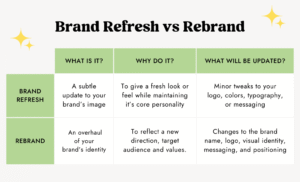
Failure to evolve at all is another issue. Brands that never refresh become dated. Visuals, messaging, and systems need refinement over time. The fix is evolution, not constant reinvention. Updating with intention preserves recognition while maintaining relevance.
Measurement is often ignored. Brands focus on output rather than perception. Without feedback, mistakes persist. Fixing this branding mistake means paying attention to recognition, trust, and clarity rather than vanity metrics.
How to Fix Branding Mistakes Systematically
Fixing branding mistakes requires structure, not reactive redesigns.
Start with an audit. Review all touchpoints side by side. Websites, social media, print materials, packaging, signage, and internal documents should be evaluated together. Patterns of inconsistency become obvious quickly.
Clarify the foundation. Revisit purpose, audience, positioning, and value proposition. Many branding mistakes stem from unclear strategy. Fixing visuals without fixing strategy only hides problems temporarily.
Simplify the system. Reduce colours, fonts, and variations where possible. Simpler systems are easier to maintain and harder to misuse. Consistency improves naturally when options are limited.
Document standards clearly. Brand guidelines do not need to be complex, but they must be specific. Clear rules prevent interpretation and drift. Accessibility matters more than perfection.
Align digital and physical execution. Branding should feel consistent online and offline. Differences in format are expected. Differences in identity are not.
Invest in quality where it shows. Focus resources on high-visibility touchpoints. Business cards, packaging, signage, and proposals often create first impressions. Fixing branding mistakes here delivers immediate impact.
Test before scaling. Proof prints, material samples, and mockups reveal issues early. Fixing problems at small scale prevents costly errors later.
Educate internal teams. Everyone who touches the brand should understand how to use it. Consistency improves when decisions are guided by shared principles.
Work with experienced partners. Branding mistakes often come from siloed execution. Collaboration with Kawaii Labs Corporate helps businesses translate brand strategy into consistent print, packaging, and physical brand systems that work in real-world conditions.
Ultimately, branding mistakes are not failures. They are signals.
They indicate where clarity is missing, systems are weak, or execution has drifted. Fixing them does not require starting over. It requires intention, discipline, and alignment.
Strong brands are not those that never make mistakes. They are the ones that recognise them early and correct them thoughtfully.
When branding mistakes are addressed systematically, brands become easier to recognise, easier to trust, and easier to remember.